
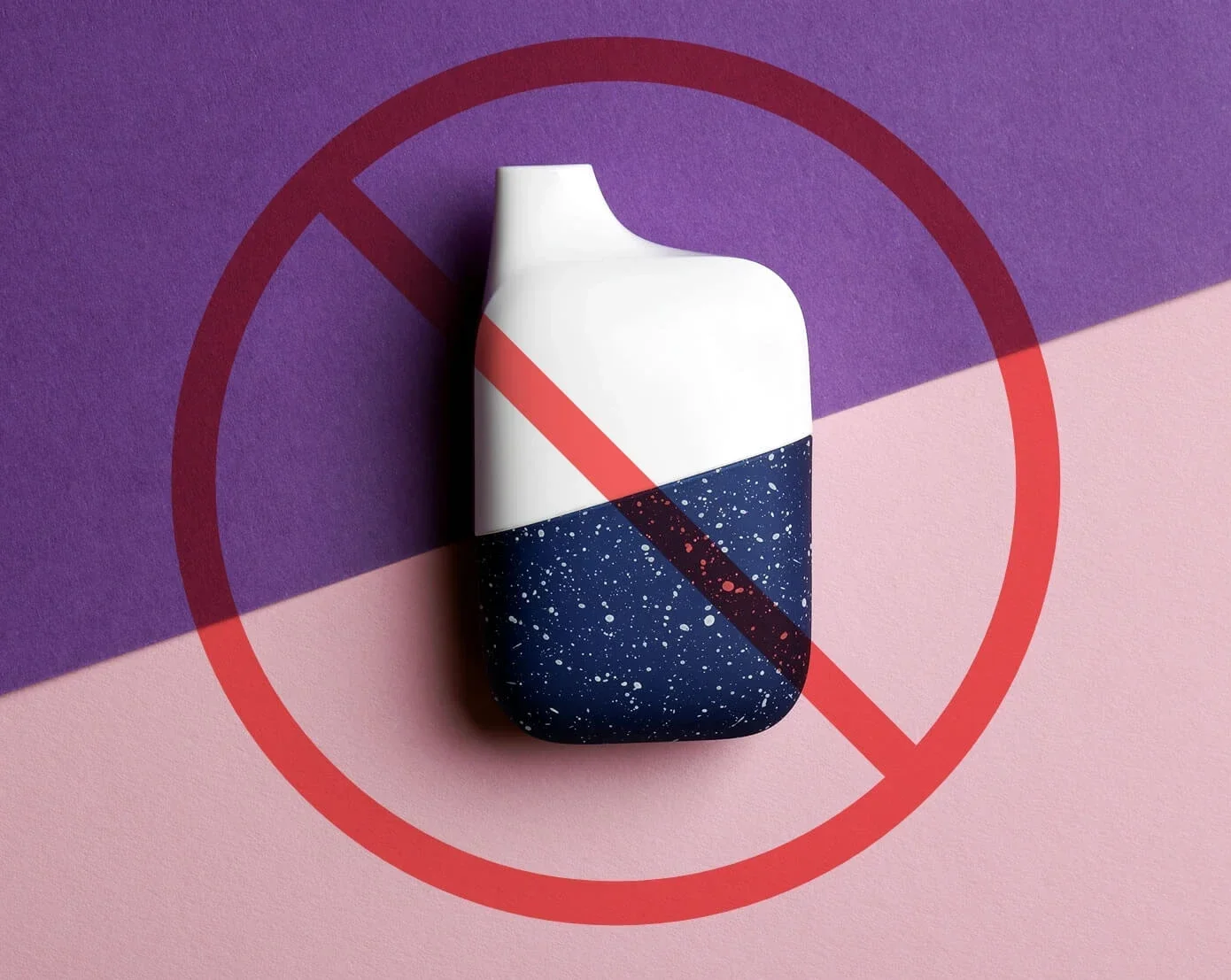
Why were flavored vape products banned in California:
- Blamed for getting teens addicted to nicotine
- Allegedly 4 out of 5 teens (80%) become addicted by flavored vape products
Firstly, it’s important to know that there’s always some sort of bias surrounding information, data, and data retrieval. For example, a pro-vape individual will adamantly support vaping. An anti-vape individual or organization will state they are harmful. Vaping definitely has its downfalls, but is much safer than smoking cigarettes. Vaping is a fairly recent phenomenon in our human culture and has been more widespread since the 2014’s. It’s hard to make definitive statements about it’s safety as many times in the past there were false alarms regarding safety for other products. Doctors used to promote cigarettes in 1937 and doctors stated that opioids are non-addictive in the 1980’s and 1990’s. There must be decades of scientific studies and research to figure out if there are health risks associated with any product’s use. Currently the jury is out and vaping is known to be much safer than cigarettes.
What was Proposition 31?
During the nationwide 2022 midterm elections there were separate elections in every state. In California, there were numerous propositions from gambling, rent control, and to vaping products. For proposition 31 or SB 793, the state of California has established a minimum standard prohibiting the sale of certain flavored tobacco by any retailer or vending machine selling tobacco products. The legislation applies to a wide variety of flavored tobacco products, including menthol cigarettes, chewing tobacco, snuff, e-cigarettes, little cigars, and roll-your-own tobacco.
- $46.6 million supported Prop 31
- $20.7 million opposed Prop 31
Support to ban flavored tobacco included the former New York mayor and known billionaire Michael Bloomberg, Kaiser Foundation, and California Teachers Association. The main funding came from the billionaire Michael Bloomberg providing $33.2 million or 71% of the total funding.
Opposition to ban flavored tobacco included R.J. Reynolds Tobacco Company and Philip Morris, ITG Brands. The main funding to oppose the bill came from R.J. Reynolds Tobacco Company with $8.1 million (39.1%) and Philip Morris with $8 million (38.6%).
Other flavored Tobacco Products not included in the ban are:
- Flavored Hookah and Shisha
- Flavored Pipe Tobacco
- Flavored Premium Cigars
How will the new law be enforced?
The final votes have already been marked and it appears there was a total of 10,726,807 votes.
- 6,803,424 voted Yes (63.4%)
- 3,923,383 voted No (36.6%)
On December 21, 2022 the law was officially entered into California and it states retailers are no longer allowed to sell the flavored tobacco products. Disobeying the new proposition and law comes with a fine of $250 per offense. The new law doesn’t go against local municipalities or city’s laws which are usually as strict or stricter regarding the sale of tobacco products. The only issue is that there is no defining authority which is going to enforce the new law. It depends on each city or local municipality on how they specifically want to target the now illegal sale of flavored tobacco products. As it’s in a gray area some cities may never create an action plan to deal with the new law. Time to understand why vaping or vapes have been targeted in this recent law.
Are teens actually getting addicted to vapes?
The real question is whether or not teens are actually becoming more addicted to nicotine through vaping. Unanimously throughout all research and studies it appears that vaping is more common among youths and teens. Scrubbing through the studies led by the Center of Disease Control, National Institute of Health, and Food and Drug Administration we come to the statistics. The three studies will be linked in the references section at the bottom of the article. Here is some of the important information:
- From 2014 youths started using e-cigarettes or vapes more commonly (CDC)
- Across the board it appears vape use has increased among youths (CDC, FDA, NIDA)
- Middle Schoolers and High Schoolers said obtaining a vape is very easy to fairly easy (NIDA)
- E-Cigarettes or Vapes are the most commonly used tobacco product among teens (FDA)
- 13.1% of High Schoolers and Middle Schoolers report using vapes in the past 30 days (CDC)
- 24.6% of High Schoolers vaped daily (CDC, FDA)
- 8.3% of Middle Schoolers vaped daily (CDC)
- 85.8% High Schoolers and 79.2% Middle Schoolers used flavored vapes (CDC, FDA)
- The most common method of vaping were disposables (CDC, FDA, NIDA)
It seems as if the answer to this question is a redounding yes. Teens are technically using vapes more frequently than in previous years. However, there is a rebuttal related to this topic. The rebuttal includes the fact that of course there is going to be an increase in teens using vapes. Reasoning for this is that it became more popular amongst all age groups. A good reference to this is stating that Americans drove less in cars during the 1800’s. Absolutely, Americans drove less in cars during the 1800’s as the first car invented was in 1886. Its crucial to note that just because something is more widespread doesn’t necessarily mean it’s more or less dangerous than other products.
When a substance becomes more popular, it can be more readily available, and more people may be exposed to it. This increased exposure can lead to more people trying the substance, which can result in an increase in use. Additionally, when a substance becomes more popular, it can be more socially acceptable or even seen as trendy to use it. This can create a peer pressure or “fear of missing out” effect, where people may feel pressure to try the substance or continue using it to fit in with their social group. Marketing and advertising can also play a role in increasing the popularity of a substance. For example, if a substance is marketed as a safe or natural alternative to other drugs, it may attract a wider audience and increase use. However, it’s important to note that other factors can also contribute to increases in substance use, such as changes in availability, changes in social or economic conditions, or changes in attitudes towards drug use. Therefore, it’s important to consider multiple factors when examining trends in substance use.
According to the NIDA study, previous substances teens used to be addicted to in the past have began to phase out. For example, here are some statistics:
- Only 3.6% of High School Seniors smoke cigarettes/hookah (NIDA)
- 20 years ago the number was 22.4% (NIDA)
- Only 1.7% of High School Seniors misuse Vicodin (NIDA)
- 15 years ago the number was 10.5% (NIDA)
- Only 17.5% of High School Seniors have been drunk off alcohol (NIDA)
- 5 years ago the number was 26% (NIDA)
As the use of vapes has increased the use of other substances has decreased. The abundance of teens using e-cigarettes may be the next trend to hit schools and society. Many parents would agree with the idea that no substances and being sober is the best way for their children to live their life. The issue with this is many parents also have stories regarding their own substance use in the past. As humans have children the overprotective bearish ideals begin to flourish. It’s natural to want your child to be safe and sober. As vaping and vapes still need further studies to conclude their safety its important to note that currently vaping is a lot safer than alcohol, opioids, and cigarettes. Maybe it’s the better version of the two evils that exist, but lets dig into why teens and adults alike choose disposable vapes.
Why disposable vapes?
It appears the main target of this bill was the vape juices and disposable vaping products. The one-time use or disposable vapes such as Flum, Elf bar, and Dragbar have had a massive intrusion into the market for many different reasons. Some reasons why the one-time use vapes were loved among the smoker’s community is that they are convenient, portable, low-maintenance, and strong. The majority of them were 5% nicotine or 50mg which was the maximum allowed on retail markets. Once the vape begins to taste burnt, loses flavor, consumers would simply throw them away and buy a new one which was easy and simple. Pros for disposable vapes compared to box mods or sub-ohm atomizers included the fact that consumers never needed to worry about:
- buying or carrying vape juice
- refilling or replacing the sub-ohm tanks
- replacing the sub-ohm coils
- charging separate batteries
- portability or convenience
- vapor production
Many people switched to vapes from cigarettes because they didn’t want a stench associated with them. Cigarettes are widely known to have a strong odor on people’s clothing, cars, and homes. Smoking cigarettes causes a disturbance to the local environment and there are many detrimental health effects to smoking. Smoking cigarettes causes problems such as teeth degradation, lung cancer, and cardiovascular disease. The impact of a single cigarette is much greater than vaping.
Is vaping safer than cigarettes?
The answer to this question is a guaranteed yes for many different reasons. Cigarettes have up to 7,000 chemicals inside a single cigarette, 250 of these chemicals are considered to be harmful chemicals in the smoke, and 69 of them cancer causing. Main documented harms caused by smoking cigarettes are lung cancer, (COPD) Chronic Obstructive Pulmonary Disease, cardiovascular disease, stroke, and for women potential miscarriages. Some of the chemicals found in cigarette smoke include, but are not limited to:
- Arsenic
- Cadmium
- Chromium
- Vinyl Chloride
- Formaldehyde
So why would vapes be a safer alternative than cigarettes. Firstly, because they don’t have the thousands of chemicals inside the medium used to vape. The chemicals used in vapes are used in numerous different settings and are referred to as PG and VG. Propylene Glycol (PG) exists in different forms such as in toothpaste, sodas, bread, dairy, and in fog machines. Propylene glycol is classified by the Federal Drug Administration as generally recognized as safe. Vegetable Glycerin (VG) is also used in certain everyday products such as food, pharmaceuticals, and cosmetics which is also regarded by the FDA as generally recognized as safe. There is essentially four different ingredients in vape juice which are flavorings, PG, VG, and nicotine. Vapes and vaping still comes with potential risks such as nicotine hijacking the brains reward center allowing for short term gratification. Currently from a decade of popular use there hasn’t been any major health issues with the regulated products. A perfect place to learn about the myths of vaping pushed by the big tobacco industry is on the United Kingdom government website with seven myths associated with vaping.
There are a few articles out there which try to paint vapes as dangerous. Bloomberg.com has an article stating that vape juices contain 2,000 chemicals which is not usual for vape juice. Lung.org states that vaping can expose you to toxic chemicals and metals which are harmful. There are also a few articles that state vaping can cause popcorn lung disease which has not been proven. The majority of the popcorn lung disease was found by a Harvard study blaming vapes for the disease possibility. However, the only people who have become ill with popcorn lung disease were popcorn manufacturers in a popcorn factory exposed to industrial machinery. The chemical causing the illness was diacetyl which was found in vape juices but the popcorn lung disease was never commonly found in vape users. Lastly, there are a few articles state vaping can cause hospitalizations or death which was overblown by mainstream media to portray vaping as dangerous. This was mostly due to black market THC cartridges which will be talked about in the next section.
The future and the black market?
Sadly, many people in California had some beautiful testimonials on how vaping has improved their health, social life, and stamina. As they quit cigarettes and moved on to vape products including the disposable vapes they saw a massive improvement of their day to day life. It has helped many people quit using nicotine or nicotine products completely. The reason it’s easier to quit may be that it’s easier to control vaping as it’s modifiable and you don’t need to finish the whole thing compared to a cigarette. Users can adjust their milligrams of nicotine depending on if they are using salts or traditional methods. Examples include 3 mg which is .03% usually found in sub-ohm tanks e-liquid. Others including the disposable vape can have up to 50 mg of nicotine or 5% in the e-liquid. People who used vape products can even mix-and-match or craft their own e-liquid. Eye-opening testimonials can be found on the CASAA website known as “The Consumer Advocates for Smoke-free Alternatives Association.”
Now that the flavored tobacco products are banned in California it seems many will begin to have trouble with their nicotine addictions yet again. The ultimate fear is that the support from Prop 31 stated that many teens became addicted to flavored nicotine products. Allegedly they stated 4 out of 5 teens used this method to begin their nicotine addiction. The important question to ask now is whether or not it was a good idea to have forced this proposition into law. It was already illegal to sell tobacco or tobacco flavored products to minors before the proposition was set into law. Now all this means is that the same minors are still going to get their “fix”, but through other means. The reality of the situation is that when things are banned or become illegal it doesn’t stop them from being sold on the market.
California is most likely going to see a massive illegal market for new disposable vapes or counterfeit products. This opened a whole new can of worms that California, local municipalities, and cities are not ready to handle. The illegal market opens up the chance of the same teens and adults who were using these flavored vape products to potential health risks. When a market is regulated such as the flavored tobacco market it allows regulations to make the products safe. With it being illegal there will most likely be a surge in fake vape products which can be cut or mixed with anything. Either people are now going to be buying harmful fake products or they are going to have to switch back to smoking cigarettes. Both new alternatives don’t seem as if they will help people who are struggling with a nicotine addiction. The fact of the matter is that nicotine is definitely a highly addictive substance, make sure not to use these products, and not get addicted.
A perfect example of black market supplies being dangerous is the recent upswing of deaths involving vapes in 2019 between August and September. Its important to know that essentially most of these deaths were due to black market or underground THC vapes. Many of the marijuana vapes were cut with vitamin E acetate causing EVALI or E-cigarette, or Vaping Product, Use Associated Lung Injury. Since vapes have been around for a decade or two nothing of this magnitude was reported in the previous years. Around 77% of the products implicated were THC cartridge vapes, 19% were nicotine devices mostly related to JUUL, and 5% were other. There was a total of 2,807 EVALI cases with a total of 68 deaths reported by the Centers of Disease Control.
Conclusion
California ballots were voted on regarding proposition 31 which officially banned flavored tobacco products from retailers statewide. A major supporter of the ban was the former New York Mayor known as Michael Bloomberg donating millions of dollars to the cause. As many people used flavored tobacco products mainly known as vapes to quit cigarette addiction it is now a major worry for people in the state. The alternatives are most likely going to be more harmful to the consumer including fake products, counterfeit products, and cigarettes. It appears that many teens and adults are now hooked onto the flavored vape products so it brings into the question if they will continue with their addiction. If they do it means that the tobacco companies will still have revolving customers who are still addicted to nicotine. In the opposing side maybe everyone who used to be addicted will be able to quit cold-turkey and never use nicotine products again. Nobody really knows what this proposition will cause in the long-term, but right now it seems the consequences outweigh the benefits.