
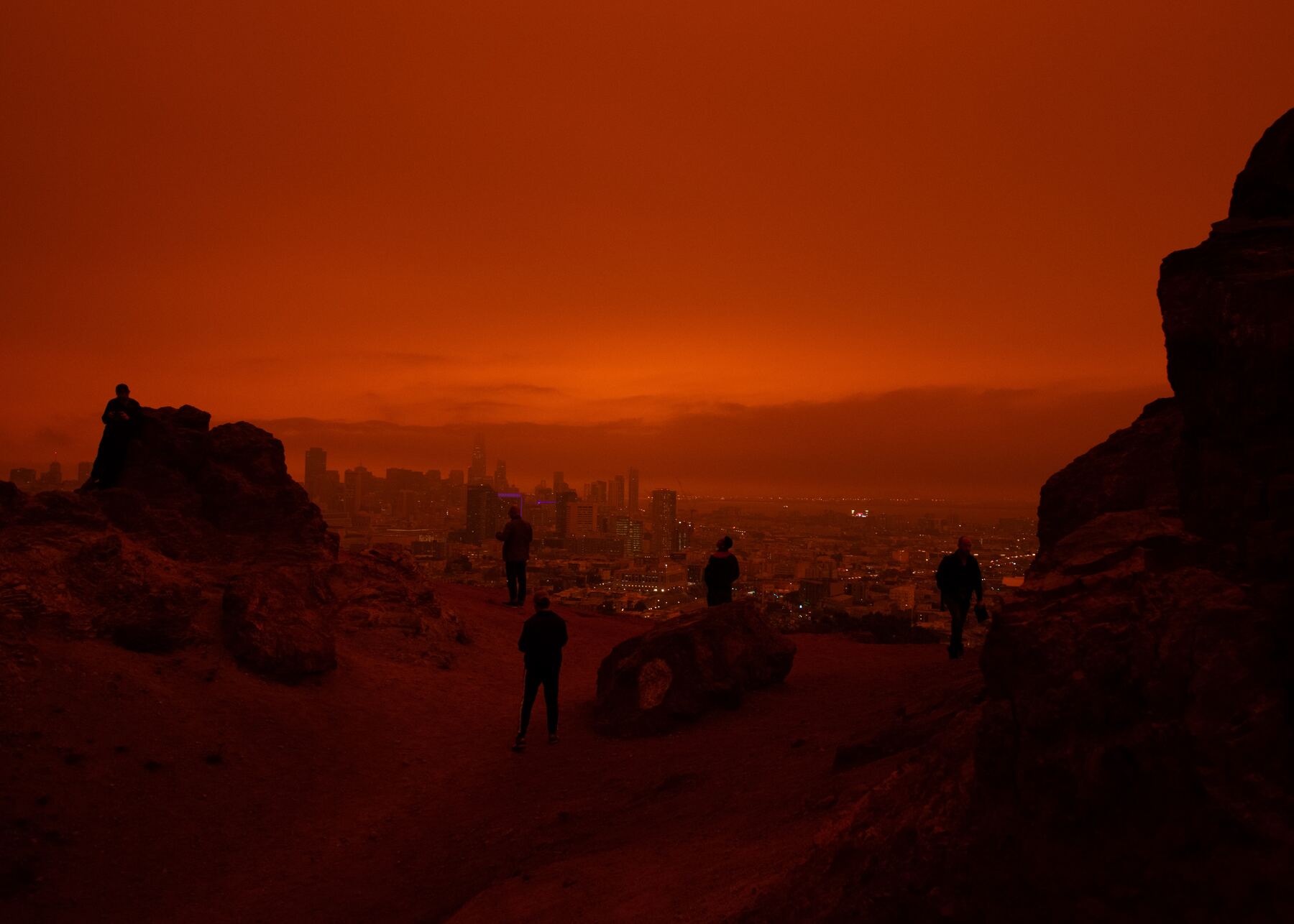
Dystopian futures have been readily understood by countless individuals with some being more notable than others. The future is an unknown with nobody being able to predict the correct outcome. Sometimes people are able to predict future technologies or societal changes. However, complete understanding of what may happen is completely unprecedented. The reason for this is that every human action all across the world can spark and raging fire of alterations to the end of humanity as we know it.
This end of humanity’s current position shouldn’t be thought of as absolute doom. Although there are dystopian realities which suggest such possibilities such as nuclear warfare causing an end to the current reality we live in. A post apocalyptic idea of a dystopia is quite common with a perfect example being the video game Fallout. We’ll dive into the horrible conclusion known as the nuclear post apocalyptic dystopia later. Right now it’s important to understand what may happen and what could happen.
Another idea of the future of humanity or dystopia would be a complete assimilation to technology. This could involve artificial intelligence in some scenarios and could involve biotechnology in others. Again doom is not the ultimate motive, but the real ultimate motive is having the imagination to feel what different human timelines could occur. As in the recent decade climate change has been a hot topic with many articles, individuals, and climate scientists stating it could change our environment forever.
Are you interesting in the potential future dystopias? Well you’ve come to the right place as we’re going to dig into everything. There are many great books, movies, and shows about the dystopian futures which we’ll list for your continued investment to the idea. The major thing to note is what would the most likely scenario occur and how it’s going to change humanity forever. Will this alterations to our timeline make life better or worse.
Dystopia
It’s extremely crucial to state that the future of humanity is unknown and could be altered by a single person, creation, or technology. Remember to stay grounded when thinking about these potential changes as if you gaze into the abyss for long enough, the abyss will gaze back into your soul. For example, the Wright brothers were the real reason we have planes today. Someone or a group of people have always changed the world we live in.
From the beginning of civilization to raiding, agriculture, castles, religion, inventions, the renaissance era, the dark ages, the industrial revolution, slavery, automobiles, roads, internet, and finally artificial intelligence. The landscape of humans has been exponentially evolving from the beginning of homosapiens to what we are today. Technology has taken a huge turn in the road causing us to advance faster than ever before. Dystopian realities are an existential threat to humanity, but they may be able to set humans to colonizing other solar systems.
Without humanity’s drive to change the world around them, they would never be able to evolve as much as we’ve seen. Our creativity, ingenuity, and passion is the reason we all exist today. The ancestors humans have were able to survive and thrive in a cruel world filled with disease, starvation, and continuous threats. However, humans were not only able to survive through it all, but they continually advanced causing them to withstand such harms. Today people enjoy the comfort of their homes with substantial food supply chains and of course being able to modify the environment with buildings, heating, and cooling.
This is no longer a question of the possibility of a dystopian future. With continuous advancements and the foolishness of the human mind there’s going to be a day and age where everything hits the fan. The length of which this takes will cause it to become more severe as a rubber band can only be stretched so far. Imagination is the key to the outcome of such dystopian futures. For example, the books 1984, Fahrenheit 451, and The Brave New World are perfect examples of writers imagining the timeline far from their reach. As humans we have a certain time period which everyone will perish with only our children as a continuum for the process of our bloodlines. There is beauty to this as permanence will lead to losing emotions, feelings, and excitement that temporary things can only bring us. Think about the first time you’ve ever hiked in your life and the joy it brought you being able to reach the top of a mountain. If humans lived forever and we can experience everything in the world we have ever wanted to, there would be lackluster experiences after doing things over and over again.
What is a Dystopian Future?
A dystopian future is often depicted as a world that has experienced a catastrophic event or a gradual erosion of freedoms and rights that leads to a bleak and oppressive society. This society is typically characterized by extreme inequality, where a small elite hold all the power and wealth, while the rest of the population lives in poverty and oppression.
In dystopian futures, individuality and creativity are often suppressed or punished, as conformity and obedience are valued above all else. Citizens are often subject to constant surveillance, and their movements, actions, and even thoughts may be monitored and controlled by the government or other powerful entities.
Often, these societies are maintained through violence and force, with dissenters and rebels facing severe punishment or death. The natural world may also be in a state of decline or destruction, with pollution, climate change, or other environmental disasters contributing to the bleak and hopeless future.
Other types of dystopian futures can include types such as technological, alien, nuclear, environmental, and much more. We’ll get into many of these after we explain a few of the important and noteworthy ones crafted by great writers.
Despite the bleakness of these futures, dystopian stories often contain a message of hope, as they inspire readers and viewers to consider the importance of individual freedom, social justice, and the need for resistance against oppressive regimes. By exploring the dark potential of the future, dystopian stories can serve as a warning against the dangers of authoritarianism and a call to action for a better, more just world.
Types of Dystopian Futures
There are many different types of dystopian futures that can be imagined beyond the ones I previously mentioned. Here are a few examples:
- Technology: In this type of dystopian future, technology has advanced to the point where it dominates every aspect of society, and people have become overly reliant on it. Machines, robots, and artificial intelligence have replaced human workers, leading to widespread unemployment and social unrest. Additionally, technology may have unforeseen negative consequences, such as the creation of dangerous, self-replicating artificial intelligence or the exploitation of personal data by powerful corporations.
- Environmental: In an environmental dystopia, the world has become uninhabitable due to climate change, pollution, or other environmental disasters. Resources are scarce, and society is in a constant state of conflict over access to water, food, and other essentials. This type of dystopia can serve as a warning about the importance of environmental conservation and the consequences of ignoring climate change.
- Alien: In this type of dystopian future, humanity is forced to deal with the arrival of an advanced alien species that seeks to subjugate or destroy humanity. The arrival of the aliens may bring about a period of intense conflict, with humanity struggling to mount an effective resistance against the technologically superior invaders.
- Post-apocalyptic: In a post-apocalyptic dystopia, a catastrophic event such as a nuclear war or pandemic has devastated the world, leaving only a handful of survivors struggling to survive in a harsh and unforgiving environment. This type of future can explore themes of survival, morality, and the human condition in the face of extreme adversity.
These are just a few examples of the different types of dystopian futures that can be imagined. Dystopian stories allow us to explore the consequences of our actions and the potential dangers of different paths we may take as a society. By imagining these possible futures, we can better understand the challenges we face and work towards creating a better world for ourselves and future generations.
There’s hundreds of different other possibilities in dystopian futures such as dating artificial intelligence robots, enveloping ourselves in virtual reality, loss of resources due to greed, apocalyptic disasters, using social credit systems, and much, much, more. Whether these future ideologies will come into existence in our lifetime or our children’s lifetime the chance of them existing is always there. Maybe humans find a way to increase our life span which also takes a toll on the planet and our mentalities. The best part about it is that we will never truly know the future. The possibilities are endless even if they are less favorable than what we desire.
1984
“1984” is a dystopian novel set in a future totalitarian society where the government, led by the all-powerful figure known as “Big Brother,” controls every aspect of citizens’ lives. The story follows Winston Smith, a low-ranking member of the ruling party who secretly harbors rebellious thoughts against the oppressive regime.
Winston begins to rebel in small ways, such as starting a forbidden diary and having a forbidden love affair with a fellow rebel named Julia. However, their rebellion is discovered by the Thought Police, who use torture and brainwashing to force Winston to confess his crimes and betray Julia.
The novel explores themes of government surveillance, censorship, propaganda, and the importance of individual freedom and independent thought. It is a chilling warning against the dangers of totalitarianism and the importance of standing up for one’s beliefs, even in the face of overwhelming oppression.
Fahrenheit 451
“Fahrenheit 451” is a dystopian novel set in a future society where books are banned and “firemen” burn any that are found. The story follows protagonist Guy Montag, a fireman who begins to question his role in society and the censorship of knowledge.
As Montag’s curiosity and dissatisfaction with his life grow, he becomes involved with a group of rebels who seek to preserve knowledge by memorizing books. Montag’s involvement with this group leads him to confront the government’s oppression of free thought and expression, which leads to a violent and dramatic conclusion.
The novel explores themes of censorship, government control, conformity, and the power of knowledge. It serves as a warning against the dangers of a society where individuality and intellectualism are suppressed in favor of mindless conformity.
The Brave New World
“Brave New World” is a dystopian novel set in a future society where human beings are genetically engineered and conditioned to conform to strict social hierarchies. The novel follows the story of Bernard Marx, an outsider who does not fully fit into the rigid caste system of his society, and John the Savage, a man who was raised outside of the system and is brought into this highly structured world.
The novel explores themes of social control, individuality, and the consequences of a society that values stability and conformity over personal freedom and self-expression. In this world, pleasure and instant gratification are valued above all else, and citizens are kept in line with the use of drugs and conditioning.
As the story unfolds, Bernard and John both struggle against the constraints of their society, with tragic consequences. Ultimately, the novel questions whether a society that values stability and conformity can truly lead to a fulfilling and meaningful existence for its citizens.
The Handmaid’s Tale
“The Handmaid’s Tale” is a novel by Margaret Atwood that takes place in a dystopian future where a totalitarian government has taken over the United States, renaming it Gilead. The story is narrated by Offred, a woman who has been forced into sexual servitude as a “handmaid” due to her fertility. In Gilead, handmaids are assigned to elite families to bear children for them, as many women have become infertile due to pollution and other environmental factors.
Offred’s life is tightly controlled by the government, and she is not allowed to read or communicate with anyone outside of her assigned family. The novel explores themes of oppression, gender roles, and the struggle for individual freedom in the face of an oppressive regime.
Throughout the book, Offred grapples with the loss of her former life, her relationships with other women, and her hope for a better future. The story is a powerful critique of patriarchal systems, religious fundamentalism, and the dangers of government overreach. It has become a classic of dystopian literature and has been adapted into a popular television series.
Black Mirror
The Netflix series “Black Mirror” is known for its depiction of dystopian realities through its use of dark and unsettling themes, often exploring the negative effects of technology and society. Each episode presents a standalone story set in a near-future or alternate version of our own reality, which serves as a warning about the potential consequences of our increasing reliance on technology.
The show explores various dystopian themes, such as the dangers of social media, the ethical implications of artificial intelligence, the consequences of virtual reality addiction, and the potential abuses of government surveillance. Each episode presents a unique and often unsettling vision of a possible future, offering a commentary on contemporary society and technology.
The show has received critical acclaim for its thought-provoking and often disturbing content, as well as its exploration of contemporary social issues through the lens of dystopian fiction. It has become a popular and influential example of dystopian storytelling in modern pop culture.
Wall-E
While “Wall-E” depicts a future that is far from ideal, it is not necessarily a typical example of a dystopian future. The movie is set in a post-apocalyptic world where humanity has abandoned Earth due to environmental devastation and has become reliant on a space station, the Axiom, for survival.
On the Axiom, humans have become extremely sedentary, with their every need being met by advanced technology. They have grown complacent and disconnected from nature, and have lost touch with the skills and knowledge necessary to sustain life on Earth.
However, the movie ultimately presents a hopeful message, as the titular robot Wall-E inspires the humans to return to Earth and reconnect with the natural world. The story encourages us to take responsibility for our actions and work towards building a sustainable and equitable society.
While “Wall-E” does not fit the typical mold of a dystopian story, it does offer a cautionary tale about the dangers of environmental degradation and the importance of preserving our planet. The movie’s message is ultimately one of hope and optimism, suggesting that even in the face of great challenges, we can still work towards a better future for ourselves and our planet.
Conclusion
Dystopian futures are often presented as a cautionary tale, warning us of the potential consequences of our actions and the dangers of authoritarianism and societal control. While these futures may seem like pure fantasy, it is important to recognize that the seeds of dystopia can be found in our current world.
History has shown that societies can be susceptible to authoritarianism, and as technology continues to advance, new forms of control and surveillance become possible. Environmental degradation and climate change also pose significant threats to our future, and the consequences of inaction could be catastrophic.
However, while the possibility of a dystopian future cannot be completely ruled out, it is not inevitable. By recognizing the warning signs and taking action to address the underlying issues, we can work towards creating a more just and equitable society. This may involve fighting against oppression and discrimination, supporting efforts to mitigate climate change, and advocating for individual freedoms and human rights.
Dystopian stories can serve as a reminder of the importance of remaining vigilant and engaged in our society, and as a call to action to work towards a better future for all. While the possibility of dystopia may always exist, we have the power to shape our future and create a world that is just, sustainable, and free.