
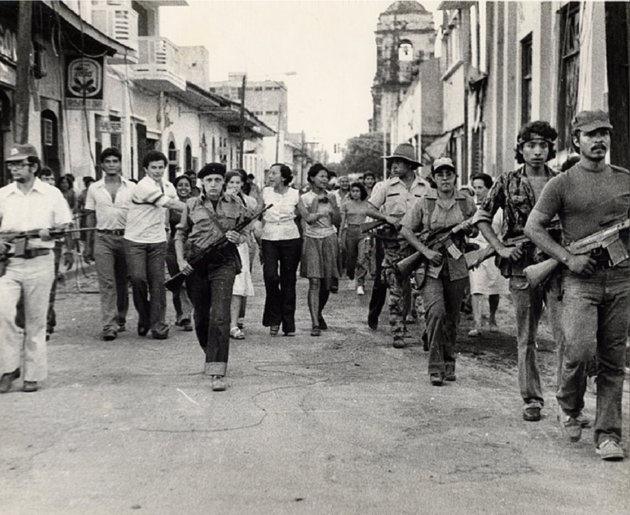
A huge question exists about how the Nicaraguan revolution, the CIA, and crack cocaine are related. The answer is much darker than what you can possibly imagine. Upon unraveling the mysterious secretes surrounding the events it may cause one to question the United States government. The Central Intelligence Agency (CIA) may have committed massive atrocities which were documented by a journalist known as Gary Webb. Now Gary Webb is no longer with us due to his death in December 2004 which was ruled as a suicide. Two gunshots to the head was the method he allegedly chose, but keep in mind if it’s truly possible to shoot yourself in the head….twice.
The story in this article is going to be gruesome, horrid, and tough to swallow for the general population. However, it’s important to know the events, facts, and the human suffering involved with this case. In theory, if Gary Webb told the truth about what the CIA operation truly was then it means Nicaraguans and the black communities in Los Angeles were victims of their game. A great movie was made regarding this exact topic known as “To Kill a Messenger” by Michael Cuesta in 2014. The movie had a budget of $5 million and made $6.7 million at the box office which means it didn’t obtain the required recognition it deserves. The entire scandal began with the Nicaraguan Revolution and the CIA operatives providing support to the rebel groups in the country.
The Nicaraguan Revolution
The Nicaraguan Revolution that took place from 1979 to 1990 causing it to have lasted for about 11 years. The Nicaraguan Revolution was a conflict that resulted in the overthrow of the Somoza dictatorship, which had ruled Nicaragua for several decades. The revolution was led by the Sandinista National Liberation Front (FSLN), a left-wing revolutionary group.
- Background
Nicaragua, under the authoritarian rule of the Somoza family dynasty for several decades, faced deep-rooted social inequality, widespread corruption, and political repression. The Somoza regime, supported by the United States, amassed significant wealth and power while suppressing dissent and exploiting the country’s resources. The frustration and grievances of the Nicaraguan people ultimately culminated in the beginning of the Nicaraguan Revolution movement that sought to challenge the status quo.
- The Rise of the Sandinistas
The Sandinista National Liberation Front or (FSLN), formed in 1961, emerged as a leftist revolutionary group aiming to overthrow the Somoza regime and establish a more equitable society. Named after Augusto Cesar Sandino, a national hero who led a rebellion against U.S. occupation in the 1920s and 1930s, the Sandinistas attracted support from a diverse range of Nicaraguan society, including peasants, workers, intellectuals, and students. This allowed the Nicaraguan Revolution to gain traction in battling against the previous regime of the Somoza family.
- The Revolution Unfolds
In 1978, a broad-based coalition against the Somoza dictatorship, known as the National Opposition Union (UNO), formed. The Sandinistas played a crucial role within this alliance. The revolution gained momentum in 1979 when a general strike and widespread protests paralyzed the country. The FSLN, along with other opposition groups, fought against the Somoza government in a guerrilla war. As the pressure intensified, the Somoza regime finally collapsed on July 19, 1979, leading to the triumph of the Nicaraguan Revolution.
- Sandinista Governance
Following the overthrow of the Somoza regime, the Sandinistas assumed power and embarked on a transformative agenda. They implemented policies focused on land redistribution, agrarian reform, nationalization of key industries, and social welfare programs aimed at reducing poverty and inequality. The Nicaraguan Revolution also emphasized education, healthcare, and women’s rights, making notable strides in these areas. The Sandinistas implemented socialist policies, including land reforms, nationalization of industries, and social welfare programs.
- International Context and Challenges
The Nicaraguan Revolution unfolded during the height of the Cold War, which significantly influenced the trajectory of events. The United States, concerned about the Sandinistas’ socialist orientation and their alignment with Cuba and the Soviet Union, supported counter-revolutionary forces known as the Contras. The Contras, backed by U.S. funding and training, engaged in guerrilla warfare against the Sandinista government, exacerbating the internal conflict. The Contras engaged in guerrilla warfare and acts of sabotage against the Sandinista government.
- Legacy and Controversies and Transition to Democracy
The Nicaraguan Revolution left a lasting impact on the country and the region. While the Sandinistas implemented social and economic reforms that benefited many Nicaraguans, their rule was not without controversy. The revolution polarized the country and faced criticism for curtailing political freedoms and human rights violations. The Contra war, with its devastating consequences, inflicted significant economic and social hardships on the population. In 1990, Nicaragua held national elections, which resulted in the defeat of the Sandinistas by a coalition of opposition parties led by Violeta Barrios de Chamorro. This marked a peaceful transition from Sandinista rule to a democratic system of governance. The main thing to understand here is that many other revolutionary conflicts like the Nicaraguan Revolution don’t tend to simply let go of the power they held, and it seems the leaders of the Sandinistas truly wanted a better world for the Nicaraguan people.
Conclusion of the Nicaraguan Revolution
The Nicaraguan Revolution remains a defining moment in the country’s history, representing a struggle for social justice, national sovereignty, and self-determination. It brought about significant changes in Nicaragua and influenced political dynamics in Central America. The revolution’s impact, both positive and controversial, continues to shape Nicaragua’s socio-political landscape. It serves as a reminder of the complex interplay between ideology, geopolitics, and the aspirations of the Nicaraguan people for a more just and inclusive society.
While the Nicaraguan Revolution’s goals of empowering the marginalized and challenging the entrenched elite resonated with many, its implementation faced challenges and generated divergent interpretations. The revolution’s legacy remains a subject of ongoing debate, with differing perspectives on the successes and shortcomings of the Sandinista government. Today, Nicaragua stands at a crossroads, grappling with political polarization, economic inequality, and questions of democratic governance.
Understanding the Nicaraguan Revolution is essential for comprehending the country’s present dynamics and contemplating its future trajectory. As Nicaragua continues its journey, it is crucial to remember the transformative spirit of the revolution and strive for a society that upholds democratic principles, respects human rights, and pursues social justice. The Nicaraguan Revolution serves as a powerful testament to the enduring struggle for freedom, equality, and dignity that reverberates not only in Nicaragua but throughout the world.
CIA Intervention
The Nicaraguan Revolution, a pivotal moment in Central American history, was not only shaped by internal dynamics but also influenced by external actors, most notably the Central Intelligence Agency (CIA) of the United States. The CIA’s involvement in Nicaragua during the revolution had far-reaching consequences, contributing to the complexities and conflicts that unfolded during this period. This article explores the role of the CIA in the Nicaraguan Revolution and its impact on the course of events.
- Covert Operations and the Contras
As the Sandinista National Liberation Front (FSLN) gained strength and overthrew the Somoza dictatorship in 1979, the United States grew concerned about the potential spread of socialism in the region. The CIA, acting on behalf of the U.S. government, began supporting counter-revolutionary forces known as the Contras, who opposed the Sandinista government and their Nicaraguan Revolution. The Contras, composed of former National Guardsmen and other anti-Sandinista elements, received funding, training, and weapons from the CIA.
- Arms Smuggling and Support
One key aspect of the CIA’s involvement in the Nicaraguan Revolution was its facilitation of arms smuggling to the Contras. Despite a U.S. congressional ban on direct military aid to the Contras, the CIA was instrumental in coordinating the covert transportation of weapons to the Contras via intermediaries and foreign governments. This support bolstered the military capabilities of the Contras and prolonged the conflict.
- Economic Warfare and Destabilization
The CIA also played a role in implementing economic warfare strategies against the Nicaraguan revolution. The U.S. government imposed economic sanctions and trade embargoes, aiming to undermine the Sandinista government’s ability to govern effectively and gain popular support. These measures had a significant impact on the country’s economy, exacerbating social tensions and hardships faced by the Nicaraguan people. Essentially they handicapped the new regime who sought to free the people of the country from poverty, elitism, and authoritarianism.
- Media Manipulation and Propaganda
Recognizing the importance of shaping public opinion, the CIA engaged in media manipulation and propaganda campaigns targeting the Nicaraguan Revolution. The agency utilized various covert methods, including disseminating false information, planting stories in the media, and conducting psychological warfare to influence domestic and international perceptions of the Sandinista government. These efforts aimed to create a negative image of the revolution and legitimize U.S. intervention to the citizens of the United States and Nicaragua.
- Legacy and Controversies
The CIA’s involvement in Nicaraguan revolution remains a subject of controversy and debate. Critics argue that the agency’s support for the Contras and its covert activities undermined Nicaraguan sovereignty, prolonged the conflict, and caused significant human rights abuses. Supporters of U.S. intervention, on the other hand, assert that the CIA’s actions were necessary to prevent the spread of communism and protect U.S. interests in the region.
- Implications and Lessons
The CIA’s role in the Nicaraguan Revolution serves as a cautionary tale about the complexities of foreign intervention in domestic conflicts. It highlights the potential consequences of covert operations, geopolitical interests, and the ethical considerations involved in supporting opposition forces. The impact of the CIA’s actions in Nicaragua continues to shape U.S.-Nicaraguan relations and influence discussions about the role of intelligence agencies in global affairs.
Conclusion of the CIA Operations
The CIA’s involvement in the Nicaraguan Revolution was a critical factor in shaping the course of events during that tumultuous period. The agency’s support for the Contras, along with its covert operations, arms smuggling, economic warfare, and propaganda campaigns, contributed to the prolonged conflict and the challenges faced by the Sandinista government. The impact of the CIA’s actions in Nicaragua serves as a reminder of the intricate interplay between geopolitics, foreign policy, and the aspirations of a nation undergoing revolution.
The legacy of the CIA’s involvement in the Nicaraguan Revolution continues to be a topic of debate, with differing perspectives on the ethics and consequences of covert operations. It is important to reflect on this chapter in history and draw lessons for the future. The Nicaraguan Revolution and the CIA’s role in it underscore the importance of respecting the sovereignty and self-determination of nations. It prompts us to critically examine the consequences of foreign interventions and the potential trade-offs between geopolitical interests and the well-being of local populations.
As we analyze the impact of the CIA’s actions in Nicaragua, it is essential to consider the complexities of international relations and the responsibilities of intelligence agencies. By learning from the past, we can strive for a more equitable and just approach to global affairs, one that respects the rights of nations to determine their own paths of development and progress. The story of the CIA’s impact on the Nicaraguan Revolution serves as a reminder of the interconnectedness of nations, the complexities of geopolitical rivalries, and the enduring struggles for self-determination and social justice. It prompts us to reflect on the delicate balance between national interests and the pursuit of a more peaceful and inclusive world.
Loss of Life
Please note that providing precise figures for casualties, displacements, and injuries during the Nicaraguan Revolution and the Contra war can be challenging due to varying sources and the nature of the conflicts. The following figures are estimates and should be interpreted as approximate:
Loss of Life
- Nicaraguan Revolution (1979): It is estimated that around 30,000 people lost their lives during the revolution. This includes combatants from both the Sandinista forces and the Somoza regime, as well as civilian casualties.
- Contra War (1980s): The Contra war resulted in an estimated death toll ranging from 30,000 to 50,000 individuals. This includes combatants from the Contras, Sandinista forces, and civilian casualties caught in the crossfire.
Displacement
- Nicaraguan Revolution and Contra War: The conflicts led to significant displacement within Nicaragua and across borders. It is estimated that hundreds of thousands of Nicaraguans were displaced from their homes during this period, seeking refuge in neighboring countries such as Costa Rica and Honduras or being internally displaced within Nicaragua.
Injuries
- Nicaraguan Revolution and Contra War: The number of injuries sustained during the conflicts is difficult to ascertain accurately. Combatants and civilians alike suffered injuries from direct combat, bombings, and other forms of violence. The injuries ranged from minor to severe, including physical injuries, trauma, and long-term disabilities.
It is important to recognize that these figures are approximations and the true extent of the loss of life, displacement, and injuries may vary depending on different sources and methodologies used for data collection. The consequences of the conflicts were significant and had a profound impact on Nicaraguan society, leaving a lasting legacy that the country continues to grapple with.
Crack Cocaine, The CIA, and Black Communities
Now you are wondering how exactly does this Nicaraguan Revolution, the Sandinistas, the Contras, the CIA, black communities, and crack cocaine come together. Well it’s commonly known as the “CIA and Crack Cocaine Epidemic” or the “Dark Alliance” theory. It suggests that the CIA, during the 1980s, played a role in the trafficking of crack cocaine from Nicaragua to Los Angeles and other U.S. cities to fund the Contra war in Nicaragua. This theory gained prominence after the publication of a series of articles by journalist Gary Webb in 1996, which alleged connections between the CIA, the Contras, and drug trafficking.
According to the theory, the CIA, in collaboration with the Contras, facilitated the transport of drugs, primarily cocaine, into the United States. It is claimed that the profits generated from the drug trade were used to finance the Contra rebels in their fight against the Sandinista government in Nicaragua. The specific focus was on the distribution of crack cocaine, a potent and highly addictive form of the drug, within African American communities, leading to the devastating crack cocaine epidemic that gripped many U.S. cities in the 1980s and early 1990s.
The theory further suggests that the CIA turned a blind eye to drug trafficking activities in order to maintain the support and funding for the Contras. It alleges that this covert operation had significant negative consequences, including the proliferation of drugs, the rise of violent crime associated with the crack cocaine trade, and the disproportionate impact on vulnerable communities, particularly African Americans.
However, it is important to note that the claims made in the “CIA and Crack Cocaine Epidemic” theory have been highly controversial and subject to extensive scrutiny. Several investigations, including a 1997 report by the CIA’s Inspector General and a 1998 report by the U.S. Department of Justice, found no conclusive evidence to support the allegations of direct CIA involvement in drug trafficking. Critics argue that the theory relies on questionable sources, lacks solid corroborating evidence, and overlooks the complexities of the drug trade and the Contra war.
Freeway Rick Ross
Much of Gary Webb’s Dark Alliance series had many truths in it making the idea more profound even though it was highly criticized by mainstream media. Freeway Rick Ross, Oscar Danilo Blandon, and Norwin Meneses Cantarero are individuals who played significant roles in the drug trade, particularly related to the distribution of crack cocaine in the United States during the 1980s. They are interconnected through their involvement in the drug trafficking networks operating at that time who are connected to the Nicaraguan Revolution.
- Freeway Rick Ross: Birth name is Ricky Donnell Ross, was a notorious drug trafficker and kingpin based in Los Angeles during the crack cocaine epidemic. Ross rose to prominence as one of the main suppliers of crack cocaine in the city, overseeing a vast distribution network. He acquired large quantities of powdered cocaine from suppliers, including Oscar Danilo Blandon and Norwin Meneses Cantarero, and converted it into crack cocaine for distribution. Ross’s operation was responsible for distributing massive amounts of crack cocaine throughout Los Angeles and beyond.
- Oscar Danilo Blandon: A Nicaraguan-American drug trafficker who operated as a key supplier for Freeway Rick Ross. Blandon, who had ties to the Contras, a U.S.-supported rebel group in Nicaragua, had access to large quantities of cocaine. He supplied cocaine to Ross and other distributors in Los Angeles, contributing to the rapid rise of crack cocaine in the region. Blandon’s involvement in drug trafficking became a focus of investigations and legal proceedings.
- Norwin Meneses Cantarero: Also known as “Rey de la Droga” or “King of Drugs,” is a Nicaraguan drug trafficker. He had extensive connections to the Contras and played a significant role in the cocaine trade during the 1980s. Meneses supplied cocaine to Blandon, who, in turn, supplied it to Ross and other distributors. Meneses was known for his involvement in large-scale drug trafficking operations, facilitating the transportation of cocaine from South America to the United States.
The connections between Freeway Rick Ross, Oscar Danilo Blandon, and Norwin Meneses Cantarero reveal a complex web of drug trafficking networks operating during the crack cocaine epidemic. These individuals played pivotal roles in the supply chain, enabling the distribution of significant quantities of cocaine, which ultimately fueled the emergence and spread of crack cocaine in the United States. Their actions and connections became the subject of investigations, prosecutions, and public attention as the impact of the crack cocaine epidemic unfolded. All of which adds to the testimonies and series Gary Webb created, Michael Ruppert acclaimed, and had to do with Nicaraguan Revolution.
To Kill a Messenger Movie
The movie “Kill the Messenger.” It is a 2014 American biographical crime thriller directed by Michael Cuesta. The film is based on the true story of journalist Gary Webb and his investigation into the connections between the CIA, Nicaraguan Contras, and the crack cocaine epidemic in the United States during the 1980s. In the movie, Jeremy Renner portrays Gary Webb, an investigative journalist who uncovers evidence suggesting that the CIA was involved in facilitating the smuggling of drugs into the United States as a means to fund the Contras in the Nicaraguan Revolution.
Webb’s series of articles, titled “Dark Alliance,” created a significant controversy and led to both praise and backlash from various sources. “Kill the Messenger” explores Webb’s journey as he faces challenges, skepticism, and threats to his reputation and career due to his findings. The film delves into the ethical dilemmas faced by journalists, the power dynamics between government agencies and the media, and the personal toll that investigative journalism can have on individuals.
It’s worth noting that the movie is a dramatized adaptation of real events, and some aspects may have been fictionalized or condensed for storytelling purposes. However, in at the end of the movie it is true that Gary Webb the original journalist attempting to document what was happening did die. Gary Webb, the journalist portrayed in the movie “Kill the Messenger,” died in December 2004. His death was ruled as a suicide. Webb’s investigative work and the controversy surrounding his reporting had a significant impact on his life and career.
Following the publication of his “Dark Alliance” series, Webb faced intense criticism and backlash from some mainstream media outlets and government agencies. He experienced professional setbacks and challenges, which took a toll on his personal and emotional well-being. While the circumstances surrounding Webb’s death remain a subject of debate and speculation, it is widely acknowledged that he faced considerable professional and personal difficulties following the publication of his groundbreaking investigative work.
Webb’s reporting and the issues he raised about government involvement in drug trafficking and the Contras’ activities continue to be topics of discussion and analysis. His work sparked renewed interest in examining the relationship between intelligence agencies, geopolitical conflicts, and the drug trade. It’s important to note that Webb’s story is complex, and there are varying perspectives on his work and its implications.
Death by Suicide?
There have been some speculations and conspiracy theories suggesting that Gary Webb’s death was not a suicide but an assassination. These theories claim that his work and the sensitive information he uncovered may have made him a target for those who wanted to silence him. However, it’s important to note that the official ruling on Webb’s death was suicide, and there is no conclusive evidence supporting the assassination theories. Webb’s family and close associates have also stated that they believe his death was a result of his personal struggles.
Gary Webb died on December 10, 2004. According to official reports, he died of two gunshot wounds to the head, which was ruled as a suicide by the coroner’s office. He was found in his apartment in Sacramento, California. Webb used a .38 caliber revolver, and the coroner’s report concluded that he had shot himself twice. The manner of his death generated controversy and debate, with some questioning the circumstances and suggesting alternative theories, including the possibility of foul play.
However, it’s important to note that the official investigation, including the coroner’s ruling, determined his death as a suicide. Webb had been open about his struggles with depression and the difficulties he faced following the backlash to his “Dark Alliance” series. His death was seen by many as a tragic culmination of those challenges. The circumstances surrounding Webb’s death have been extensively discussed and analyzed by various sources, and opinions on the matter differ.
Michael Ruppert and the LAPD
Officer Michael Ruppert, a former LAPD narcotics detective, emerges as a prominent figure in discussions surrounding the alleged CIA involvement in drug trafficking during the crack cocaine epidemic. Ruppert’s investigations and claims garnered significant attention as he delved into the connections between the CIA, drug smuggling operations, and the broader crack cocaine crisis. He put forth the belief that the CIA played a complicit role in allowing drug trafficking to generate funds for covert activities, including support for Contra rebels in Nicaragua.
Ruppert’s work, akin to the efforts of Gary Webb, ignited intense controversy and drew both support and criticism from various quarters. His contributions added fuel to the public discourse surrounding the alleged ties between intelligence agencies and the drug trade. Tragically, in 2014, Ruppert took his own life, leaving behind a legacy of investigative work and alternative perspectives on government involvement in drug trafficking.
It is important to acknowledge that the claims put forth by both Gary Webb and Michael Ruppert continue to be subjects of ongoing debate, characterized by varying opinions and levels of corroboration. The intricate nature of these allegations and their implications in comprehending the crack cocaine epidemic underscore the imperative for continued scrutiny, research, and critical analysis of these complex issues.
Conclusion
Gary Webb, the Nicaraguan Revolution, and the CIA are intertwined in a complex web of controversy, allegations, and differing interpretations. Webb’s investigative reporting on the alleged connections between the CIA, the Contras, and drug trafficking sparked intense debate and raised important questions about the intersections of geopolitics, covert operations, and the devastating consequences of drug epidemics.
Webb’s series of articles, known as the “Dark Alliance,” brought attention to the alleged involvement of the CIA in facilitating the trafficking of crack cocaine from Nicaragua to Los Angeles and its impact on African American communities. While his work shed light on critical issues and stimulated public discourse, it faced significant criticism, particularly regarding the veracity and comprehensiveness of his claims.
The Nicaraguan Revolution itself was a pivotal moment in the country’s history, characterized by the overthrow of the Somoza dictatorship and the rise of the Sandinista government. The revolution brought about profound social and political changes, but it was also met with opposition from various groups, both domestically and internationally.
The role of the CIA during the revolution and the subsequent Contra war has been a subject of controversy. Allegations of CIA involvement in supporting the Contras and covert operations, including drug trafficking, have been fiercely debated. Official investigations have not conclusively proven direct CIA involvement in drug trafficking, but the underlying complexities and the opaque nature of intelligence operations make it challenging to fully uncover the truth.
The legacy of Gary Webb’s work, the Nicaraguan Revolution, and the CIA’s alleged role in the drug trade continues to spark discussions about government accountability, the impact of foreign interventions, and the complexities of the war on drugs. It serves as a reminder of the importance of critical thinking, rigorous investigative journalism, and the ongoing pursuit of truth and justice.
Understanding these interconnected topics requires careful examination of multiple sources, considering diverse perspectives, and remaining vigilant in the pursuit of an accurate understanding of historical events. Only through continued dialogue, research, and transparency can we hope to unravel the complexities surrounding Gary Webb, the Nicaraguan Revolution, and the CIA’s alleged involvement in drug trafficking.
