
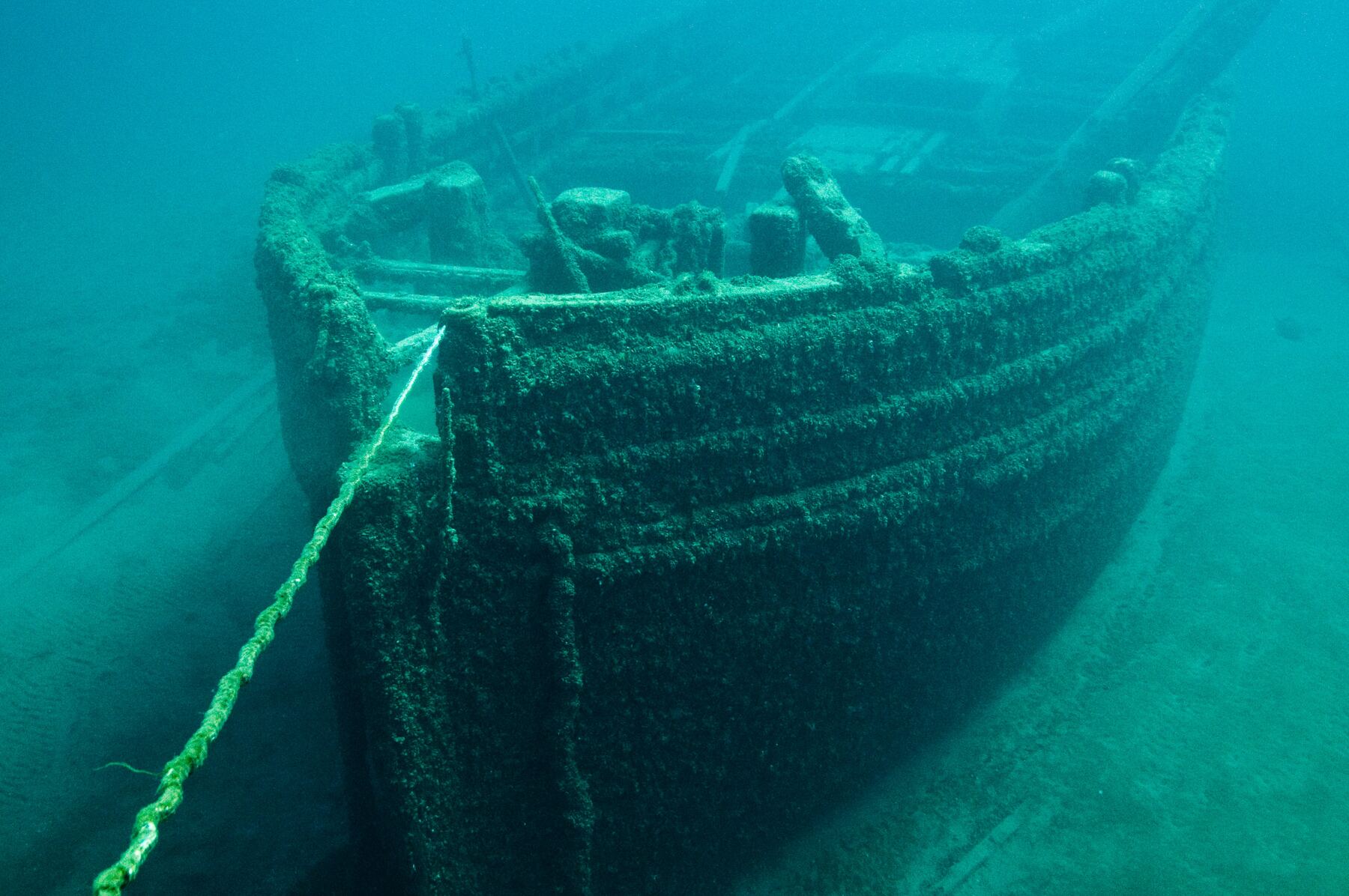
On June 18th, 2023, Titan which was a submersible to bring people to the Titanic debris site at the bottom of the ocean was conducting an operation by the company known as OceanGate. Five different individuals who were millionaires and one billionaire took the trip onto Titan to go see the debris left behind by the failed Titanic. The enjoyable $250,000 trip took a turn for the worst as once they boarded it took a few hours before the main ship lost contact with the submersible craft.
Titan: Timeline of Events
- Crew boarded on Sunday at 8AM: A crew of five people boarded Titan in efforts to hopefully see the titan debris site at the bottom of the ocean. The people who boarded the OceanGate craft including Stockton Rush, Paul-Henri Nargeolet, Hamish Harding, Shahzada Dawood, and Suleman Dawood.
- Lost contact at 10:45AM: The main ship known as Polar Prince lost contact with the vessel right before 11:00 AM meaning they had no idea what was happening on board. This might have come at a surprise, but in the multiple dives with OceanGate this was not a phenomenon. Due to its buoyancy the Titan vessel had to use it’s thrusters to descend lower at some points in testing. The thrusters on board may have ultimate caused too much disturbance in the water causing the main ship and the vessel to lose contact prior to this incident in a separate mission.
- US Coast Guard began search at 5:40PM: Due to how long the submersible was underwater the United States Coast Guard began to worry about it’s status. After the worrying began an international search and rescue operation began trying to see if they can potentially find the people on board hoping that they will still be alive. The submersible at this point has oxygen left in it’s cabin as it has a 96-hour supply.
- Tuesday and Wednesday: Sonar equipment from Canada heard banging noises underwater with sonar equipment late Tuesday and into the morning on Wednesday which gave hope the people on board were still alive. A rush of adrenaline was sent throughout the helping organizations including the US Navy, Canadian Authorities, US Coast Guard, and help was going to be brought in with the French.
- Thursday Morning: After a multitude of efforts were underway time was running out as the Titan vessel would run out of oxygen. Some speculated the crew on the vessel could take matters into their own hands by conserving oxygen by laying flat, lowering their breathing, and attempting to not use too much of what was left. However, news finally broke out that there was debris from the Titan vessel that were found. A unanimous understanding was reached as now the people helping in the efforts knew that the Titan vessel had imploded from the pressure underwater.
Who Were On Board
- Stockton Rush: An entrepreneur and the CEO of OceanGate Inc., a company focused on manned submersible technologies for deep-sea exploration. OceanGate specializes in designing and manufacturing submersibles capable of reaching depths of up to 4,000 meters (13,123 feet). Stockton Rush has been instrumental in the development of innovative submersible technologies and has played a significant role in advancing deep-sea exploration. His company, OceanGate, has been involved in various projects, including expeditions to explore historic shipwrecks and survey underwater archaeological sites.
- Paul-Henri Nargeolet: Is a French diver and underwater explorer who gained prominence for his involvement in the search for and exploration of the RMS Titanic, the famous ocean liner that sank in 1912. He has extensive experience in deep-sea diving and has been involved in numerous underwater expeditions and salvage operations. Nargeolet has been affiliated with various organizations and companies dedicated to underwater exploration and salvage. Notably, he served as the co-leader of the 1996 Titanic expedition led by the RMS Titanic, Inc., and later became the expedition leader for RMS Titanic, Inc., a subsidiary of Premier Exhibitions. Throughout his career, Nargeolet has been actively involved in documenting and preserving the remains of the Titanic. His work has included capturing detailed imagery of the wreck, recovering artifacts, and contributing to scientific research related to the ship and its tragic sinking.
- Hamish Harding: Businessman, aviator, and adventurer. He is the co-founder and current CEO of Action Aviation, a global business jet aircraft brokerage company. Additionally, he has been involved in various aviation-related endeavors and record-breaking attempts. Hamish Harding gained significant attention for his participation in the “One More Orbit” mission in July 2019. The mission aimed to break the world record for the fastest circumnavigation of the Earth via both poles. Harding, along with a team of pilots and crew, successfully completed the mission in a Gulfstream G650ER aircraft, covering a distance of approximately 48,000 kilometers (30,000 miles) in just over 46 hours. Harding’s passion for aviation and adventure has led him to engage in other notable expeditions and challenges. He has participated in endurance rallies and aviation events, consistently pushing the boundaries of what is possible in the world of aviation.
- Shahzada Dawood: An accomplished business figure from Pakistan. He has indeed held prominent positions in Engro Corporation, a Pakistani conglomerate with interests in energy, chemicals, and other sectors. Dawood served as the Vice Chairman of Engro, contributing to its strategic direction and overseeing its operations. Additionally, Dawood has been associated with the Dawood Hercules Corporation, an investment and holdings company that has diverse investments in sectors like textiles, fertilizers, foods, and energy. His expertise in mergers and acquisitions has likely played a crucial role in expanding the business interests of these companies across various industries.
- Suleman Dawood: Son of Shahzada Dawood and Suleman Dawood has been actively involved in various business ventures and is known for his contributions to the healthcare and education sectors. Suleman Dawood is associated with the Dawood Foundation, a charitable organization established by the Dawood family. The foundation focuses on improving healthcare and education in Pakistan by supporting initiatives and projects in these areas. Under Suleman Dawood’s leadership, the foundation has implemented numerous programs and initiatives aimed at enhancing healthcare infrastructure, providing medical services, and promoting quality education.
Safety Concerns of OceanGate and Titan
There were numerous safety concerns regarding Titan which was the submersible that was found imploded on Thursday, June 22, 2023. The company OceanGate stated they worked with numerous companies which gave them a bit of renown as their craft looked on paper like it was well-tuned and ready for deep sea exploration. However, after doing a little digging onto the craft it seems the people they stated they worked with including Boeing, NASA, and the University of Washington Applied Physics Laboratory (APL) stated they did not have anything to do with the Titan.
- OceanGate Director David Lochridge: In January 2018, Mr. Lochridge stated there was no way for the OceanGate team to check the vessel to check for damages in the hull. With the current materials of the Titan vessel it wasn’t well-known how well the design would work as it was made of Titanium and Carbon Fiber. The acrylic window also wasn’t suited for the depths they wanted to reach. David did not want to continue the expeditions due to the safety concerns he had and stated there should be no more testing until they can check the hull for damage over time.
- Loss of Contact: There have been numerous events with the communication from the main ship and the Titan craft. A few times occurred where the communications could be lost for several hours without a possibility to have contact with the main ship. As a true engineer this fact would be extremely important as loss of communications could cause severe issues during the descent into deep waters. Knowing where the Titan submersible is and being able to contact it would be crucial to retrieve it or understand if there are any issues on board.
- Forced Latch: The opening of the Titan had to be bolted on meaning that if the OceanGate Titan did end up ascending to the surface of the ocean water they wouldn’t be able to get out. Twitter users didn’t understand why this fact was important, but in theory if the submersible wasn’t imploded, lost communications, and did ascend to the surface the crew on board would still die of suffocation as they wouldn’t be able to leave the craft. The lost communications would be an issue as well because nobody would know where it ended up or if it was still underwater.
- No Industry Standards: The Titan submersible didn’t only have no safety regulations of the structure, but there were numerous industry experts who raised concerns about Titan. Going underwater is more difficult than going to space due to the fact that water is extremely dense. At the bottom of the ocean where the Titanic wreckage can be found there would be an estimated of over 5,500 PSI on whatever craft goes to that depth. This immense amount of pressure wouldn’t only kill you, but it would destroy you in an instant without a specialized submarine. The CEO known as Stockton Rush stated that regulations stand in the way of progress which isn’t just worrying, but it’s ultimately negligence. The Titan was not certified by any agency and OceanGate stated in a post that the majority of accidents occur due to operator error which in retrospect means absolutely nothing other than avoiding certifications as it wasn’t safe.
- GPS, Navigation, and Beacon: The submersible also didn’t have proper communication systems to reliably detect where the craft would be. As GPS may be impossible to use deep underwater there could be better navigational systems set up which would send the location of the Titan through how fast it’s going, if it’s ascending or descending, and the location it’s going toward. There were none of these on the Titan vessel. Lastly, it’s important to state the method of moving the Titan would be a $30 gaming controller which could disconnect or stop working at any point.
- Damage Over Time: With continued visits to the Titanic wreckage each visit would potentially cause wear and tear to the Titan’s hull meaning the more you use it the weaker it becomes. A great example of this would be the whistleblower David Lochridge who raised these exact concerns. He stated multiple times that there is no method for OceanGate to understand and check the damage to the hull prior to descending again. He was removed from his position and sued by the company. The Titan may have been able to do the deep sea dive the first time without any issue, but each visit would cause a significant amount of wear and tear on the hull causing it to be weaker and weaker. This would make more sense knowing that the hull did implode on this last visit.
Submersible and Submarine Differences
Submersibles and submarines are both underwater vessels, but they have some key differences in terms of design, purpose, and capabilities. Here are the main differences and similarities between submersibles and submarines:
- Design and Construction:
- Submersibles: Submersibles are usually small, single-person or small crew vehicles designed for scientific research, exploration, or personal use. They are typically open to the water and rely on external pressure to withstand the deep-sea environment. They often have transparent domes or viewports to allow occupants to see outside.
- Submarines: Submarines are larger, enclosed vessels built for military, commercial, or scientific purposes. They are designed to be fully submerged and have a pressurized hull to withstand the water pressure at various depths. Submarines have compartments for crew, living quarters, machinery, and weapons systems.
- Depth Capability:
- Submersibles: Submersibles are typically limited to shallower depths, often within a few thousand meters. They are suitable for exploring the ocean’s upper layers, coastal areas, and relatively shallow regions.
- Submarines: Submarines are designed to operate at much greater depths, potentially reaching several hundred meters to even beyond a kilometer. They are capable of exploring and operating in deeper waters.
- Purpose and Applications:
- Submersibles: Submersibles are commonly used for scientific research, deep-sea exploration, underwater photography, and personal underwater experiences. They allow scientists and explorers to study marine life, geological formations, and underwater ecosystems up close.
- Submarines: Submarines have diverse applications. Military submarines are designed for defense, surveillance, and strategic purposes, including submarine warfare and strategic deterrence. Commercial submarines may be used for underwater construction, oil exploration, or scientific research requiring larger crews and extended missions.
- Propulsion and Power:
- Submersibles: Submersibles typically use batteries or other electric power sources for propulsion and life support systems. They often have limited endurance and require surface support for recharging or replenishing supplies.
- Submarines: Submarines have advanced propulsion systems, including nuclear or diesel-electric engines, allowing them to operate for extended periods underwater. They can generate their own power and have sophisticated life support systems, enabling long-duration missions.
- Crew Capacity and Life Support:
- Submersibles: Submersibles are typically small and designed for a limited number of occupants, often accommodating one or a few people. Life support systems focus on providing breathable air, temperature control, and communication.
- Submarines: Submarines can accommodate larger crews, ranging from tens to hundreds of individuals. They have comprehensive life support systems, including air regeneration, waste management, and food storage, to support crew members during extended underwater missions.
Despite these differences, both submersibles and submarines share the fundamental purpose of exploring and operating in the underwater environment. They allow humans to access and study the depths of the ocean, albeit with different scales and capabilities.
Dangers of Going Underwater
Here are some reasons why it is challenging for humans to go underwater at high depths:
- Pressure: As you descend deeper into the water, the pressure increases significantly. At great depths, the pressure can become extreme, exerting immense force on the human body. This can lead to compression-related issues, such as barotrauma, where pressure imbalances can cause damage to the ears, sinuses, and lungs.
- Decompression Sickness: The increased pressure at depth necessitates the use of diving equipment and specialized techniques to control the rate at which divers ascend to the surface. Failure to follow proper decompression procedures can result in decompression sickness, also known as “the bends.” This condition occurs when dissolved gases, such as nitrogen, form bubbles in the body, leading to severe pain, tissue damage, and potentially fatal consequences.
- Cold Temperatures: Deep-sea environments are typically cold, with temperatures dropping significantly as you go deeper. Extreme cold can have adverse effects on the human body, including hypothermia and reduced dexterity, which can impact performance and safety.
- Darkness and Limited Visibility: Light does not penetrate deep underwater, resulting in limited visibility. Exploring at high depths requires specialized lighting and equipment to overcome the darkness and ensure visibility for safety and conducting tasks effectively.
- Oxygen Toxicity and Gas Mixtures: Breathing gas mixtures at high pressures can lead to oxygen toxicity, which can cause seizures and other serious complications. Deep-sea diving often involves the use of specialized gas mixtures, such as helium-oxygen mixtures, to mitigate these risks.
- Physical and Psychological Stress: Deep-sea environments subject divers to physical and psychological stressors. The prolonged exposure to extreme conditions, isolation, and limited communication can have a significant impact on a diver’s physical and mental well-being, requiring proper training, preparation, and support systems.
- Limited Time and Resources: The logistical challenges of deep-sea exploration include the availability of resources, limited time due to decompression requirements, and the need for specialized equipment and support vessels. These factors can make extended stays or repeated visits to extreme depths logistically complex and costly.
These factors highlight some of the difficulties and risks associated with exploring high depths underwater. Overcoming these challenges requires advanced technologies, specialized training, and meticulous planning to ensure the safety and success of deep-sea expeditions.
Conspiracies of the Titan
There are several conspiracies surfacing around the Titan incident stating it may have been an inside job as the people on board had a lot of money. Other conspiracies describe that the crew had already been saved on the same day they dived and the current news surrounding the event is all fake information. Now it’s important to talk about the possibility of these situations because in reality if the news we are receiving is fake, there would be no way of finding out the truth behind the incident.
In theory, yes the news may be fake surrounding the Titan and OceanGate. However, considering everything we are being told to be fake information is a paranoid standpoint. Also in theory, yes the crew may have been saved prior to what we are being fed currently. Finally in theory, yes it could be possible that this loss of life could have been real, but it was an inside job where somebody knew that the people on board were going to die in this incident.
Theory doesn’t really matter, because in theory you could also survive a black hole as nobody has experienced what has happened when you enter one. In reality your atoms will be ripped apart if you did survive the journey toward entering a black hole. When considering theory or reality try to be a bit more understanding as in reality the safety concerns from the Titan vessel were ignored. The people on board most likely did die from the negligence of OceanGate. Before spouting out theoretical possibilities without any evidence for your claims try to understand that people’s lives were lost in this incident. Giving the news the benefit of the doubt in this incident doesn’t harm you and doesn’t change your life in the long run. Let’s believe the tragedy for what it was and send our condolences to the people who were lost in this event. Sadly, there was a 19 year old who died on the Titan that had his entire life ahead of him.
Outrage and Hatred
Now let’s talk about some of the comments made toward the people who died on the Titan submersible tragedy. There are many people out there who say “good riddance” and also claim that the rich deserve what they pay for. Other comments including “Let this be a lesson as just because you’re rich doesn’t mean you’re smart.” A lot of people don’t really care about the people involved as they were rich. Put yourself in their shoes as losing communications would be extremely frightening especially if you were located deep in the ocean with only four other people next to you for comfort. Knowing your ultimate demise is nearby would be a horrifying experience regardless if you had millions or billions of dollars in your bank. We should respect life for what it is and feel sadness regardless of how much money was in a person’s pocket prior to their death.
Secondly, people were massively upset as the international efforts were magnificent for the people on the Titan. People compared this event to another recent event known as the Greece Boat Tragedy on June 14, 2023 which took the lives of hundreds of people from Syria, Pakistan, Egypt, and Palestine. This boat was extremely overcrowded to the point where people couldn’t move, they ran out of water, and people on board began to die. An eventual demise occurred at 2:00AM as the boat capsized into open waters filled with absolute darkness. Hundreds of people including children, men, women, and elderly all died at the hands of a harsh environment.
People on board claimed the Greek Coast Guard was the reason for the capsize as they tried to tow the vessel. However, information shows that multiple private and public resources did try to help them with a refusal from people on board. This was a human trafficking occurrence where everyone on board was trying to enter another country or nation illegally by paying human smugglers to enter the destination. Comments online stated that the Titan event had international recognition while the people who died on the Greece Boat Tragedy were limited to barely any international recognition.
Conclusion
The submersible named Titan, operated by OceanGate, encountered numerous safety concerns and ultimately imploded during an expedition to the Titanic debris site. The lack of safety standards, communication systems, and proper hull inspection raised significant risks and challenges for the submersible and its crew. The incident highlights the importance of rigorous safety protocols, adherence to industry standards, and thorough inspection and maintenance procedures for deep-sea exploration vehicles.