
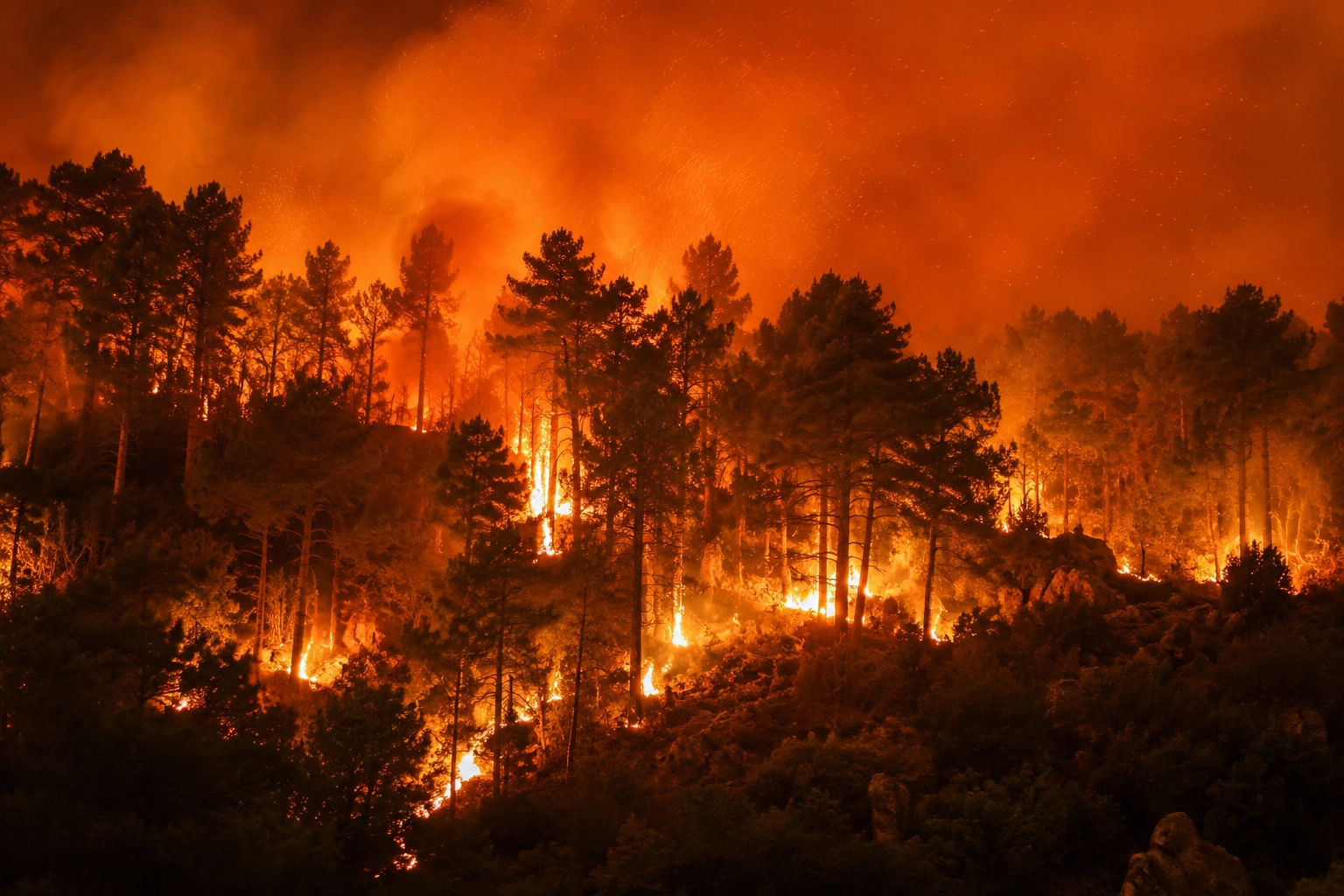
There has been over 300,000 thousand people who have been forced to evacuate due to these massive wildfires which have spread across Spain and France.
Its an unfortunate consequence of a combination of factors including, but not limited to record heat, prolonged drought, strong winds, and extremely dry forests.
The largest fires are threatening the French city of Bordeaux which is one of France’s most famous wine regions. Spain is battling one of the largest wildfires in it’s recent history.
Total Acreage
The two wildfires are currently still active and not considered contained. Thousands of firefighters, military personnel, and neighboring countries are attempting to stop the spread of these wildfires.
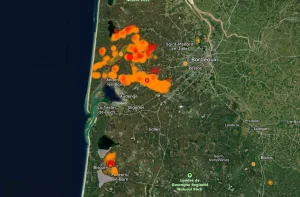
Currently the Bordeaux Fire is raging with a rough estimate of 42,000 hectares (104,000 acres) burned.
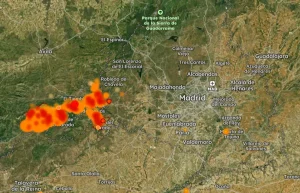
The Avila Fire in Spain has a rough estimate of 50,000 hectares (123,000 acres) burned.
Despite deploying thousands of these firefighters, military units, and aircraft, officials still haven’t been able to fully contain the largest fires. This highlights just how extreme these blazes are, they aren’t just simply large, but they are so overwhelming that even a coordinated international firefighting response is having trouble putting them out.
Wildfire Speed
Fire needs three things to spread which are heat, fuel, and oxygen. This is also considered the fire triangle. Europe currently has all three creating a perfect storm for a raging fire.
Heat has dried out the vegetation, dead grass becomes fuel, and strong winds provides oxygen while also carrying burning embers miles ahead of the main fire. This is creating new fires faster than the firefighters can extinguish the original one.
Most people consider California or Australia to be the hot zones for these types of fires, but this part of Europe actually has a Mediterranean climate. Meaning dry summers, dense forests, and seasonal winds. Historically these areas have always had fires.
The difference is how much larger and more intense are they becoming with these repeated heat waves and drought leaving the forests extremely dry.
Human Cost
Just like with other wildfires, there is a huge human cost in this equation. Entire neighborhoods have been evacuated with only minutes to spare for these families. The businesses they have come to know and love can become destroyed and burnt to ashes. Thousands today are currently sleeping in emergency shelters with the unknown bouncing in their heads.
One death has been currently recorded in Spain, hundreds of homes have been destroyed, and firefighters have suffered numerous injuries battling the explosive fires.
Climate Change?
Scientists generally agree that wildfires have always occurred naturally, but the new question to this is whether or not warmer temperatures are causing them to become worse. Including longer droughts that can cause drier conditions that make fires easier to ignite and harder to control.
Other Factors
Other factors include land management, vegetation buildup, land use changes, and human caused ignitions (arson, campfires, etc.).
Europe’s crisis isn’t just about the weather or climate change. It’s also about decades of changes in how the land is managed. Decades ago Europe’s rural landscapes were constantly being managed through farming, grazing livestock, cutting vegetation, and harvesting wood.
Rural communities in this day and age have shrunk increasing the amount of combustible material. As people move into cities, the land becomes largely abandoned causing grasses, shrubs, and young trees to accumulate year after year. Instead of small scattered patches of vegetation, you end up with huge continuous fuel beds.
Final Thoughts
These wildfires are horrible causing many people to live in fear and agony from lost homes to sleeping in evacuation shelters. As bad as these fires currently are, the main fear for people at this point in time is whether or not it can get worse. The truth may come at a surprise, but in reality the answer is yes. They can get much worse.
Whether we want to blame one thing or another doesn’t really matter to the end game. The reality is we need to think logically. Climate change can potentially cause a factor, but we can more affectively go for the smaller battles.
Currently rural areas are becoming less and less populated leading to the impending factor that these forestry areas will become less managed. Less people means less management in these areas. Now we have to factor in what we plant as some trees are more flammable than others (Eucalyptus and Pine). Grass needs more grazing as it’s the first to ignite easily and grows/dries every summer. Shrubs act like ladders allowing flames to climb upward, so getting rid of them through prevention could prevent trees from igniting. Once the flames hit the tree’s crowns it becomes incredibly harder to manage due to the flame jumping.
During more wet years there is an additional danger as more grass, shrubs, and foliage will grow. This means that once the heat kicks in, it will cause more foliage to dry. This pattern is often noticed in California as well causing some of their massive wildfires. The goal here is to know if we get a good wet season that the authorities and communities need to quickly get to the vegetation during the summer season.
Goal #1 is to avoid large wildfires as they produce more heat, create stronger winds, throw embers further, generate their own weather, and overwhelm firefighting resources. We need to shift more of the money away from fighting fires and more on preventing wildfires.