
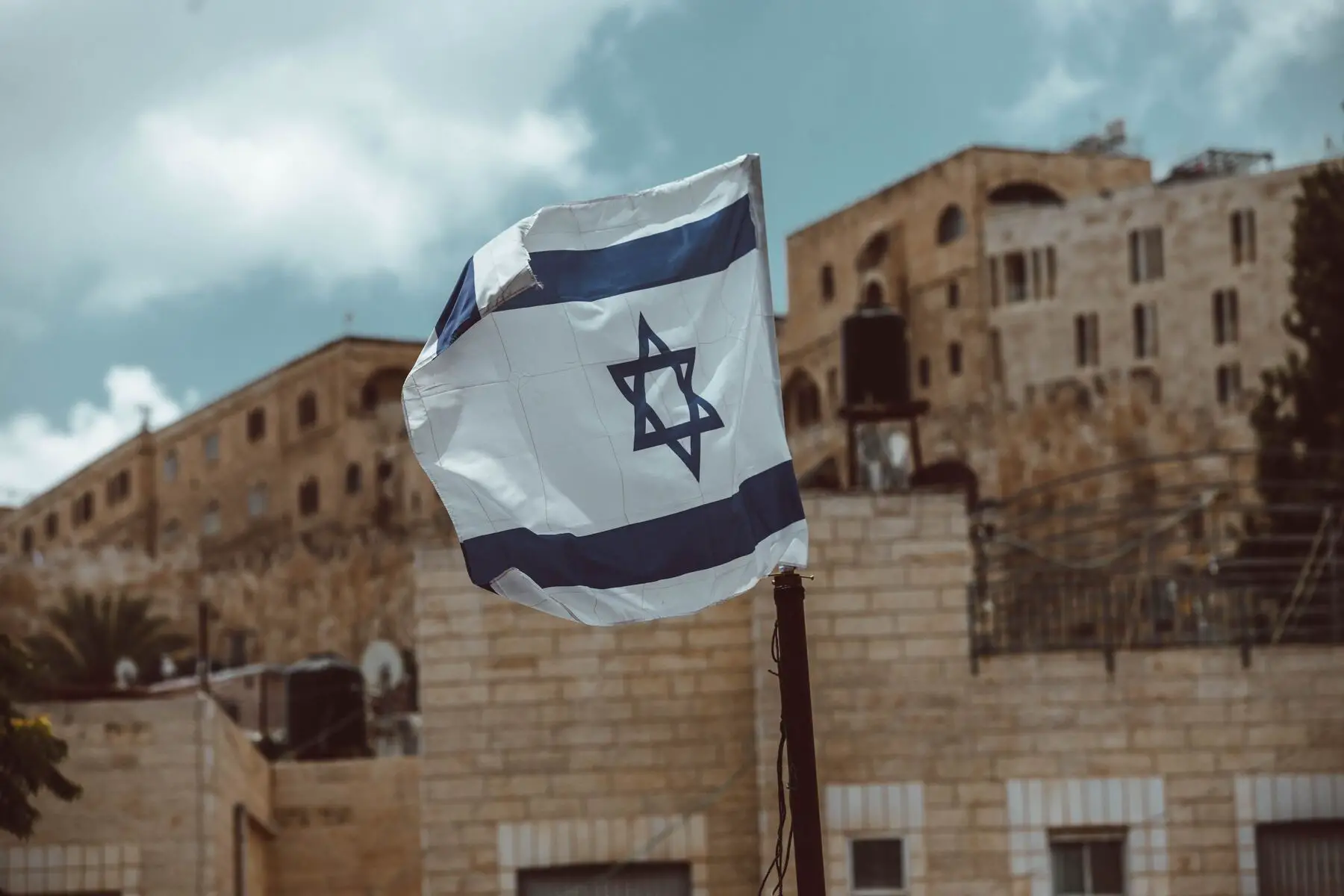
The fact of the matter is that this Israel-Hamas war is quite an extreme topic these days as there are plenty of groups supporting both sides of this war. Every piece of information you have received about this conflict is biased on either side, but here we’re going to try and provide you information to make up your own mind. Diving into the history of the region, the conflicts, the previous wars, and the relationship of Israel-Hamas and Palestine.
Israel’s Independence
The history of Israel and its quest for independence is complex and deeply rooted in historical, religious, and political factors. Here’s a brief overview:
1. Ancient Roots:
- The land of present-day Israel has a rich history dating back thousands of years, with Jerusalem holding significance in Judaism, Christianity, and Islam.
- In antiquity, the region was home to various ancient Israelite kingdoms, including the Kingdom of Israel and the Kingdom of Judah.
2. Ottoman Rule (16th-20th centuries):
- The Ottoman Empire ruled over the area from the 16th century until the aftermath of World War I.
- During this period, Jewish communities coexisted with Arab and other communities in the region.
3. Balfour Declaration (1917):
- During World War I, the British government issued the Balfour Declaration in 1917, expressing support for the establishment of a “national home for the Jewish people” in Palestine.
4. British Mandate (1920-1948):
- After World War I, the League of Nations granted Britain the mandate to govern Palestine.
- Tensions between Jewish and Arab communities increased as Jewish immigration surged.
5. World War II and Holocaust (1939-1945):
- The horrors of the Holocaust during World War II had a profound impact on international sympathy for the establishment of a Jewish state.
6. UN Partition Plan (1947):
- The United Nations proposed a partition plan in 1947, recommending the creation of separate Jewish and Arab states, with Jerusalem as an international city.
- The Jewish leadership accepted the plan, but Arab leaders rejected it.
7. Declaration of the State of Israel (1948):
- On May 14, 1948, David Ben-Gurion, the head of the Jewish Agency, declared the establishment of the State of Israel.
- Arab nations opposed the declaration and invaded the newly formed state.
8. Arab-Israeli War (1948-1949):
- The Arab-Israeli War followed the declaration of independence.
- Israel managed to survive and even expand its territory, but the conflict left lasting tensions.
9. Armistice Agreements:
- Armistice agreements were signed between Israel and its neighboring Arab states in 1949, defining borders and establishing a fragile peace.
The establishment of Israel marked a significant chapter in the history of the Middle East, shaping subsequent conflicts and geopolitical dynamics in the region. The Israeli-Arab conflict continues to influence global politics and remains a central issue in the quest for peace in the Middle East.
Invasions of Israel
Israel has experienced several invasions by Arab nations since its establishment in 1948. The major conflicts include:
1. War of Independence (1948-1949):
- Following the declaration of the State of Israel in 1948, neighboring Arab states, including Egypt, Jordan, Syria, Iraq, and Lebanon, invaded.
- Despite being outnumbered, Israel managed to survive and expanded its territory.
- Armistice agreements were signed with the neighboring states in 1949, formalizing the borders and establishing an uneasy peace.
2. Suez Crisis (1956):
- Israel, along with Britain and France, invaded the Sinai Peninsula in response to Egypt’s nationalization of the Suez Canal.
- International pressure, especially from the United States and the Soviet Union, forced the withdrawal of the invading forces, and the Suez Crisis ended without significant territorial changes for Israel.
3. Six-Day War (1967):
- Israel preemptively struck Egypt, Jordan, and Syria in 1967, resulting in a swift victory for Israel.
- Israel gained control of the Sinai Peninsula, the Golan Heights, the West Bank, and East Jerusalem.
- The aftermath of the war had profound implications for the region, including the ongoing Israeli occupation of the West Bank and East Jerusalem.
4. War of Attrition (1967-1970):
- After the Six-Day War, sporadic fighting continued along the borders, primarily between Israel and Egypt.
- The conflict eventually led to the ceasefire agreements of 1970.
5. Yom Kippur War (1973):
- Egypt and Syria launched a surprise attack on Israel during the Yom Kippur holiday in 1973.
- Initial successes by Arab forces were followed by Israeli counterattacks, leading to a ceasefire.
- The war prompted renewed diplomatic efforts and laid the groundwork for peace talks between Israel and Egypt.
6. Lebanon War (1982):
- Israel invaded Lebanon in 1982 in response to attacks by the Palestine Liberation Organization (PLO).
- The conflict led to the expulsion of the PLO from Lebanon and the establishment of a security zone in Southern Lebanon, which later became a source of ongoing conflict.
These conflicts have left a lasting impact on the region, contributing to the Israeli-Hamas conflict and shaping the geopolitical landscape of the Middle East. They also played a role in influencing diplomatic efforts, such as the Camp David Accords between Israel and Egypt in 1978, which led to Egypt becoming the first Arab country to officially recognize Israel.
Israel-Hamas Conflicts
There have been several conflicts between Israel and Hamas. The major conflicts include:
1. Second Intifada (2000-2005):
- While not a traditional war, this period saw a significant increase in violence between Israel and Palestinian groups, including Hamas.
2. Israel-Hamas Conflict (2008-2009):
- Operation Cast Lead was a three-week military conflict between Israel and Hamas in the Gaza Strip.
3. Israel-Hamas Conflict (2012):
- A series of exchanges of rocket attacks between Israel and Hamas took place in November 2012.
4. Israel-Hamas Conflict (2014):
- Operation Protective Edge occurred in response to increased rocket attacks from Gaza into Israel.
5. Israel-Hamas Conflict (2021):
- In May 2021, tensions escalated, leading to an 11-day conflict characterized by rocket attacks and airstrikes.
The conflict between Israel-Hamas is complex and rooted in historical, political, and ideological factors. Key reasons for the conflict include: The Israeli-Hamas conflict involves disputes over territory, particularly the status of the Gaza Strip, West Bank, and East Jerusalem. The establishment of the State of Israel in 1948 led to the displacement of hundreds of thousands of Palestinians, creating a long-standing refugee issue. Israeli occupation of the West Bank and East Jerusalem, as well as the construction of Israeli settlements in these areas, has been a major point of contention.
Israel’s blockade of the Gaza Strip, controlled by Hamas, has led to economic hardship and restricted the movement of people and goods. Hamas, a Palestinian Islamist group, has a different ideological stance than the more secular Palestinian Authority.
- It rejects the existence of Israel and advocates for an Islamic state in historic Palestine.
- Israel cites security concerns, including rocket attacks from Gaza, as a justification for military actions in the region.
Despite various peace initiatives, a comprehensive and lasting solution to the Israeli-Hamas conflict has remained elusive, contributing to ongoing tensions. It’s essential to note that the perspectives on the conflict vary, and different parties involved have distinct narratives and interpretations of historical events. Achieving a peaceful resolution to the conflict remains a complex challenge.
Peace for Israel-Hamas
The Israeli-Hamas conflict has witnessed various attempts at peace negotiations over the years, with numerous initiatives aimed at finding a lasting resolution to the disputes. Some notable attempts include:
1. Oslo Accords (1993):
- The Oslo Accords marked a series of agreements between Israel and the Palestine Liberation Organization (PLO), signed in 1993 and 1995.
- The accords aimed at establishing a framework for the gradual transfer of governing authority to the Palestinians in the West Bank and Gaza Strip.
- Implementation faced numerous challenges, leading to outbreaks of violence, including the Second Intifada that erupted in 2000.
2. Camp David Summit (2000):
- The Camp David Summit in 2000, hosted by then-U.S. President Bill Clinton, involved talks between Israeli Prime Minister Ehud Barak and Palestinian leader Yasser Arafat.
- The negotiations, however, did not result in a final agreement, and the Second Intifada (Palestinian uprising) erupted shortly afterward.
3. Road Map for Peace (2003):
- The Road Map for Peace was introduced in 2003 by the Quartet on the Middle East (the United States, the European Union, the United Nations, and Russia).
- The plan outlined a series of steps leading to the establishment of an independent Palestinian state, but progress was limited.
4. Gaza Disengagement (2005):
- In 2005, Israel unilaterally withdrew from the Gaza Strip, dismantling settlements and evacuating Israeli civilians. However, the disengagement did not lead to improved relations, and the situation in Gaza became more complex, eventually leading to conflicts between Israel and Hamas.
5. Annapolis Conference (2007):
- The Annapolis Conference in 2007 was initiated by U.S. President George W. Bush and brought together Israeli Prime Minister Ehud Olmert and Palestinian President Mahmoud Abbas.
- The conference aimed to relaunch negotiations, but peace talks stalled amid ongoing disagreements.
6. Kerry-Led Peace Talks (2013-2014):
- U.S. Secretary of State John Kerry initiated a new round of peace talks in 2013, involving Israeli Prime Minister Benjamin Netanyahu and Palestinian President Mahmoud Abbas.
- The negotiations collapsed in 2014, with both sides blaming each other for the breakdown.
7. Abraham Accords (2020):
- The Abraham Accords were agreements between Israel and several Arab states, including the United Arab Emirates, Bahrain, Sudan, and Morocco, brokered by the United States in 2020.
- While not directly addressing the Israeli-Hamas conflict, these accords represented a significant shift in regional dynamics.
Despite these efforts, a comprehensive and lasting resolution to the Israeli-Hamas conflict remains elusive. The challenges include issues such as borders, refugees, the status of Jerusalem, security arrangements, and the recognition of Israel’s right to exist alongside a viable and independent Palestinian state. The conflict continues to be a complex and deeply entrenched geopolitical issue.
Why No Peace?
Achieving a lasting peace between Israel-Hamas has proven elusive due to a multitude of factors. While Israel has made various attempts and offered concessions in pursuit of a peaceful resolution, there have been challenges in finding common ground with Hamas, the de facto governing authority in the Gaza Strip. Israel’s security concerns, including the threat of rocket attacks from Gaza, have been significant obstacles. Additionally, the ideological differences between Israel-Hamas, with the Hamas refusing to recognize Israel’s right to exist and advocating for an Islamic state in historic Palestine, further complicate the peace process.
Despite Israel’s efforts to engage in negotiations and make concessions, the lack of mutual recognition, ongoing hostilities, and a deep-seated mistrust between the parties have hindered the achievement of a comprehensive peace agreement. The complex nature of the conflict, including historical grievances, territorial disputes, and the broader geopolitical context, underscores the formidable challenges in reaching a sustainable resolution to the Israel-Hamas conflict.
Essentially for the Israel-Hamas conflict there have been multiple occasions of Israel creating methods to allow for a two state solution as most people advocate. However, this has been denied constantly by the Hamas leaders who ultimately want to annihilate all Jews in the region and destroy Israel as a country. They have accepted all the options Israel has given them and then continued to increase violence against the Jewish population by setting up hits to kill Jewish citizens.