
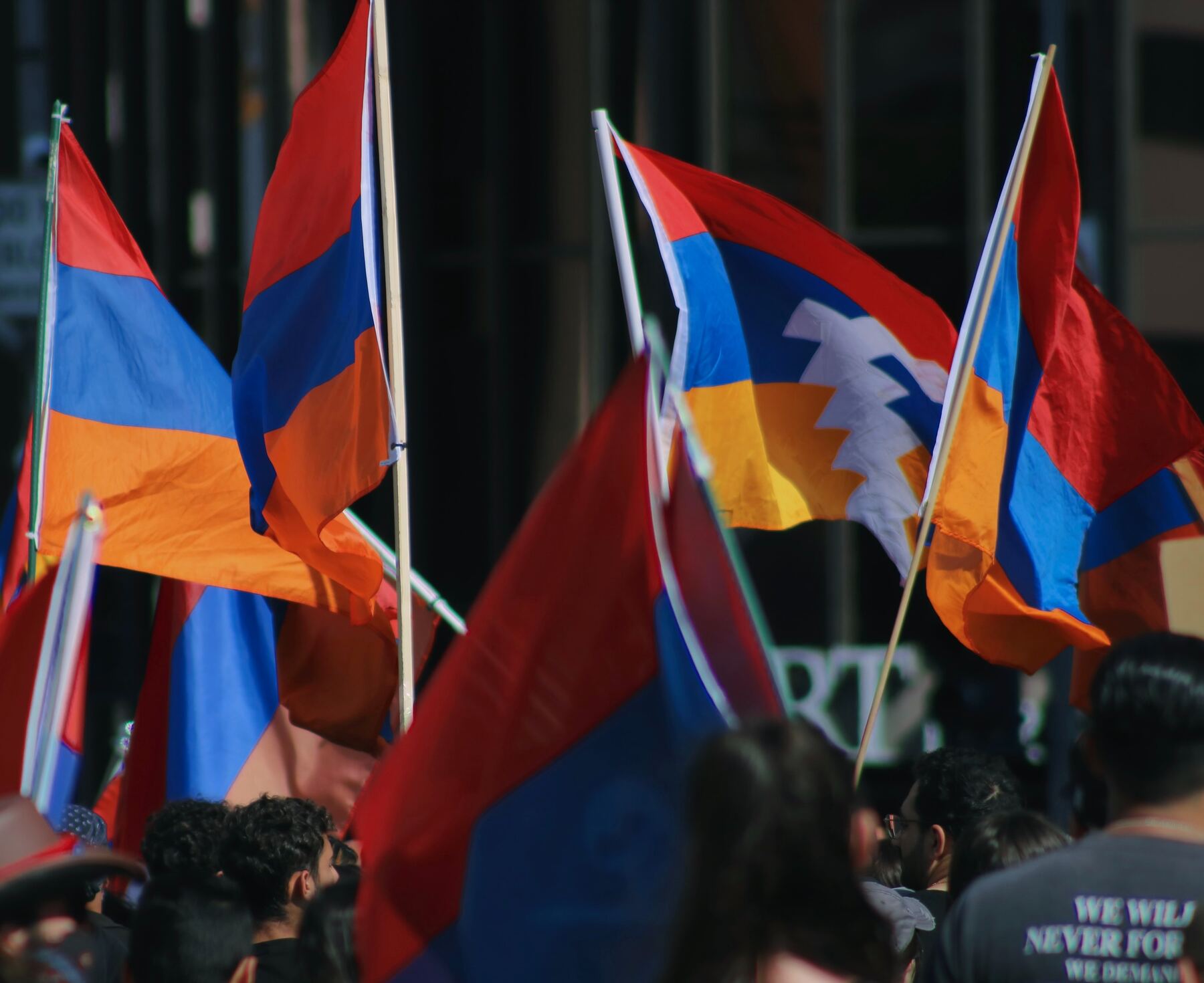
The Armenian Genocide was one of the most tragic events in modern history. It was the systematic extermination of the Armenian people by the Ottoman Empire during World War I. The genocide began in 1915 and continued until 1923. The Ottoman Empire, which was ruled by the Young Turks, ordered the killing of Armenians, and it is estimated that between 1 and 1.5 million Armenians were killed.
Background
The Armenians were a Christian minority in the Ottoman Empire. They had lived in the region for thousands of years, and their culture and language were unique. However, the Ottoman Empire was ruled by the Muslim Turks, who saw the Armenians as a threat to their dominance.
The Ottoman Empire was facing a difficult time in the early 20th century. It was in decline, and it had lost much of its territory to European powers. The Young Turks, a group of nationalist politicians, came to power in 1908 with the aim of modernizing the empire and regaining its lost territories. They believed that the Armenians were a hindrance to their plans and that they needed to be eliminated.
The Armenian Genocide
The Armenian Genocide began on April 24, 1915. On that day, the Ottoman authorities arrested and deported hundreds of Armenian intellectuals and community leaders in Constantinople (now Istanbul). This was the start of a campaign of mass killings and deportations that lasted for eight years.
The Ottoman authorities used various methods to kill Armenians. Many were marched into the desert without food or water and left to die of starvation and thirst. Others were killed outright in massacres. Women and children were often raped and killed. Many Armenians were forced to convert to Islam, and those who refused were killed.
The Armenian Genocide was carried out in a systematic and organized manner. The Ottoman authorities used census data to identify Armenians and then rounded them up for deportation. They were transported in overcrowded trains and caravans, with little food or water. Many died on the way from disease, starvation, or violence.
The international community was aware of the Armenian Genocide at the time it was happening. Many newspapers in Europe and the United States reported on the atrocities. However, no country intervened to stop the genocide. The Ottoman Empire was an ally of Germany during World War I, and the European powers were reluctant to damage their relationship with the Ottomans.
Armenian Genocide and The Holocaust
Adolf Hitler is known to have referred to the Armenian Genocide in discussions with his military commanders in the lead-up to World War II. In a speech to his senior military officers on August 22, 1939, just a few days before the invasion of Poland that sparked the war, Hitler reportedly said:
“Who, after all, speaks today of the annihilation of the Armenians?”
By making this comment, Hitler was implying that the world had largely forgotten about the Armenian Genocide, which had occurred just a few decades earlier, and that he believed he could carry out similar atrocities without facing serious consequences. In essence, there is a high potential for the fact Turkey committed a genocide toward the Armenian people with little to no consequences which may have caused the Nazis to be emboldened by the past atrocities.
Hitler’s comment suggests that he was aware of the Armenian Genocide and viewed it as a precedent for his own plans for ethnic cleansing and genocide. While there is no evidence that Hitler directly ordered the genocide of the Jewish people during the Holocaust because of the Armenian Genocide, he may have seen it as evidence that such atrocities were possible and could be carried out without serious repercussions.
Turkish People’s Intervention
There were some Turkish people who tried to save Armenians during the Armenian Genocide. While the vast majority of the Ottoman authorities and military participated in the genocide or turned a blind eye to it, there were some individuals who risked their lives to protect Armenian civilians from harm.
One example is Mehmet Celal Bey, a high-ranking Ottoman official who was the governor of Aleppo during the Armenian Genocide. Celal Bey was sympathetic to the plight of the Armenians and tried to intervene on their behalf. He refused to carry out orders to deport Armenians from Aleppo and instead used his influence to protect them from harm. He also helped to organize relief efforts for the Armenian refugees who had fled to Aleppo.
Another example is Selahattin Adil Bey, a Turkish officer who worked with the Red Crescent to provide aid to Armenian orphans who had been left homeless by the Armenian Genocide. Adil Bey was later dismissed from his position and arrested for his actions.
There were also individual Turkish citizens who risked their lives to protect Armenian neighbors and friends. For example, in the village of Yozgat, a group of Turkish villagers refused to participate in the deportation and killing of Armenians and instead hid them in their homes and provided them with food and shelter.
However, it is important to note that these instances of bravery and compassion were the exception rather than the rule. The vast majority of the Ottoman authorities and military participated in the Armenian Genocide or turned a blind eye to it, and the number of Armenians who were saved by Turkish individuals was small in comparison to the overall number who were killed or deported.
Aftermath
The Armenian Genocide ended in 1923 with the collapse of the Ottoman Empire. The new government of Turkey, which was established after the empire’s collapse, denied that the genocide had taken place. They claimed that the Armenians had died as a result of war and that the numbers were exaggerated. They also argued that the Armenians had collaborated with the enemy during World War I and that they had been punished accordingly.
The denial of the Armenian Genocide has been a contentious issue ever since. Many countries, including France, Italy, and Russia, have recognized the Armenian Genocide. However, the United States has not formally recognized the genocide, although many individual states have. Many presidents of the United States have promised to recognize the Armenian Genocide such as Obama, but their words were simply devoid of actual commitments. The Turkish government continues to deny the Armenian Genocide to this day, and it is illegal to mention it in Turkey.
On April 24, 2021 the Biden administration finally made a comment about the Armenian Genocide including the murders, deportations, and marches to their deaths. The legacy of the Armenian Genocide is still felt today. The Armenian people were displaced from their homes and forced to flee to other countries. The genocide has had a profound effect on Armenian culture and identity. Many Armenian families have stories of their ancestors who were killed or survived the genocide.
Loss of Armenian Land
During the Armenian Genocide, the Ottoman Empire, which included modern-day Turkey, seized and occupied large areas of historic Armenian land. The loss of Armenian land to Turkey was a result of a deliberate policy of extermination and displacement carried out by the Ottoman government.
As a result of the genocide, the Armenian population was decimated, with estimates suggesting that between 1 and 1.5 million Armenians were killed. The remaining Armenian population was forced to flee their homes and villages, with many becoming refugees in neighboring countries or emigrating to other parts of the world.
The territorial losses suffered by Armenia during the Armenian Genocide were significant, but they were not limited to the areas occupied by Turkey. The Ottoman Empire also occupied parts of Eastern Armenia, including the historic Armenian city of Van and surrounding areas, as well as parts of Western Armenia, which included the cities of Bitlis, Erzurum, and Sivas.
After the Armenian Genocide, the Treaty of Sèvres, signed in 1920, provided for the establishment of an independent Armenian state that included much of the historic Armenian homeland, including parts of Western Armenia and Eastern Armenia. However, the treaty was never implemented due to political and military developments in the region, including the rise of Turkish nationalism and the Sovietization of the region.
Today, the Armenian Republic, which gained independence from the Soviet Union in 1991, occupies a much smaller territory than historic Armenia, which included areas that are now part of Turkey, Georgia, and Azerbaijan. The loss of historic Armenian land remains a significant issue for many Armenians, and has been a source of ongoing conflict in the region.
Armenian Diaspora
A diaspora is a dispersed community or group of people who share a common heritage or identity, but who live outside of their traditional or ancestral homeland. Diasporas can form for a variety of reasons, including political, economic, or social factors, and can occur over different time periods.
Members of a diaspora often maintain a sense of connection to their homeland and culture, and may work to preserve and promote their heritage through various means, such as language, arts, or religious practices. Diasporas can also play an important role in shaping the political and social landscape of their adopted countries, through participation in local and national politics and civic engagement.
The term “diaspora” is often associated with Jewish history, as the Jewish people have been dispersed from their ancestral homeland in Israel for centuries. However, the concept of diaspora can be applied to any group or community that shares a common heritage and has been dispersed from their traditional homeland.
Other examples of diasporas include the African diaspora, which refers to the descendants of Africans who were forcibly taken from their homelands during the transatlantic slave trade, and the Indian diaspora, which includes people of Indian origin who live outside of India. The Armenian diaspora, which formed as a result of the Armenian Genocide, is another example of a diaspora community.
The Armenian Genocide played a significant role in the formation of the Armenian diaspora. The Armenian Genocide resulted in the displacement and death of millions of Armenians, who were forced to flee their homes and communities in what is now Turkey. Many of these refugees settled in other countries, including the United States, France, and Argentina, among others. Today, there are large Armenian communities in these countries and others around the world, which are often referred to as the Armenian diaspora.
The Armenian Genocide also had a profound impact on Armenian identity and culture. In addition to the physical displacement of the Armenian people, the genocide resulted in the destruction of many Armenian communities, cultural sites, and institutions. As a result, many Armenians outside of Armenia have worked to preserve and celebrate their cultural heritage, through organizations, festivals, and other initiatives.
The Armenian diaspora has played an important role in advocating for recognition of the Armenian Genocide, as well as supporting Armenia and the Armenian community more broadly. Many members of the diaspora have also been involved in efforts to promote Armenian culture and language, as well as supporting humanitarian and development projects in Armenia and other parts of the world.
Operation Nemesis
Operation Nemesis was a covert operation carried out by a group of Armenian activists in the aftermath of the Armenian Genocide. The goal of the operation was to assassinate Ottoman officials and leaders who had played a role in the genocide.
The operation was named after the Greek goddess of retribution, Nemesis, and was led by a group of Armenian nationalists who were based in the United States. The group included survivors of the genocide, as well as members of the Armenian Revolutionary Federation, a political party that had been active in the Ottoman Empire.
Between 1920 and 1922, Operation Nemesis targeted several high-ranking Ottoman officials who were believed to have been involved in the Armenian Genocide. The targets included Talaat Pasha, the former Ottoman Minister of the Interior and one of the main architects of the genocide, as well as several other officials.
The assassinations were carried out by individual members of the group, who were often acting alone. The assassins would approach their targets in public places, such as train stations or restaurants, and shoot them. After carrying out the assassinations, the members of Operation Nemesis would often turn themselves in to the authorities.
The actions of Operation Nemesis were controversial, and there was debate within the Armenian community about the morality and effectiveness of the operation. Some believed that the assassinations were necessary to seek justice for the atrocities committed during the genocide, while others believed that they were counterproductive and would only lead to further violence.
In the end, Operation Nemesis was disbanded in 1922, after several of its members were arrested and tried for their actions. However, the legacy of the operation lives on, and it remains a subject of debate and discussion within the Armenian community.
Battle on the Mountain of Moses
The Siege of Musa Dagh, which occurred during the Armenian Genocide in 1915. Musa Dagh, which means “Mountain of Moses” in Armenian, is a coastal mountain range located in what is now modern-day Turkey.
In July 1915, Ottoman authorities began rounding up and deporting Armenians from the surrounding villages and towns, with the intention of killing them en masse. However, a group of several hundred Armenian villagers, led by a local priest named Father Moses Der Kalousdian, decided to take refuge on the summit of Musa Dagh, where they built makeshift fortifications and held out against Ottoman forces for several weeks.
The Armenian defenders at Musa Dagh were eventually rescued by French naval forces, who had been alerted to their plight by survivors who had managed to escape. The French Navy transported the Armenians to safety in the nearby city of Port Said, Egypt.
The Siege of Musa Dagh became a symbol of resistance for Armenians, who saw it as an example of their ability to defend themselves against the Ottoman authorities. It also inspired other acts of resistance against Ottoman forces during the Armenian Genocide, although the vast majority of Armenians who were targeted during the genocide did not have the means or opportunity to resist in this way.
Reasons for the Major Losses
The Armenian people suffered major losses during the Armenian Genocide due to a combination of factors, including deliberate actions by the Ottoman government and military, as well as underlying historical, social, and economic factors.
One of the main causes of Armenian losses was the deliberate policy of extermination and deportation carried out by the Ottoman government. In 1915, the Ottoman government ordered the deportation and killing of Armenian citizens living in the Ottoman Empire, with the intention of creating a “homogenous” Turkish state. The Armenians were viewed as a threat to this vision of a Turkish nation, and were targeted for extermination.
The Ottoman government and military also carried out massacres, forced marches, and other forms of violence against Armenians in an attempt to eliminate them from the Ottoman Empire. The killings were carried out on a large scale and were often accompanied by torture, rape, and other forms of abuse.
Additionally, the Armenian people were largely unarmed and unprepared to defend themselves against the organized and well-equipped Ottoman military. Although there were some instances of resistance, such as the Siege of Musa Dagh, most Armenians did not have access to weapons or military training. Moreover, the Ottoman government had disarmed Armenian soldiers serving in the Ottoman military prior to the start of the genocide.
The Armenian people were also a minority group within the Ottoman Empire, and had historically faced discrimination and marginalization. This made it more difficult for them to organize and resist the policies of the Ottoman government. Additionally, the Armenians were dispersed throughout the empire, with many living in isolated rural communities, which made it easier for the Ottoman government to target them for extermination.
Overall, the Armenian Genocide was a result of a complex set of factors, including ethnic and religious tensions, economic pressures, and political and military strategies. The result was a devastating loss of life and a traumatic experience for the Armenian people, who continue to remember and commemorate the events of the genocide to this day.
Conclusion
The Armenian Genocide was a tragedy that has had a lasting impact on the Armenian people. It was a systematic and organized attempt to exterminate an entire population, and it is estimated that between 1 and 1.5 million Armenians were killed. The genocide was carried out by the Ottoman Empire during World War I, and despite the international community being aware of the atrocities, no country intervened to stop the genocide. The aftermath of the genocide has been characterized by denial, with the Turkish government denying that it took place, while many other countries have recognized it as a genocide.
The Armenian Genocide is a stark reminder of the consequences of intolerance and hatred. It is important that we remember and acknowledge the past, and work towards a future where such atrocities are never repeated. The Armenian people continue to seek justice and recognition for the genocide, and it is important that their voices are heard. We must continue to educate ourselves and future generations about the Armenian Genocide to ensure that such a tragedy never happens again.